
News Byte – 05.06.2026

By Byte & Block — exploring the building blocks of digital finance.
Today’s Menu
- Reform’s crypto money gets louder
- Strategy’s Bitcoin leverage feels pressure
- Polymarket’s oracle fight turns messy

Reform’s Crypto Money Moment Is Bigger Than One Donation Filing
Nigel Farage’s Reform UK is no longer just flirting with crypto politics. Crypto money is now visibly helping bankroll the party.
In the first quarter of 2026, Reform received about £7 million from two crypto-linked billionaires: Christopher Harborne, who has a stake in Tether, and BitMEX co-founder Ben Delo. That was enough to put Reform ahead of the UK’s traditional fundraising machines for the quarter, with Labour and the Conservatives each bringing in roughly the same amount as Delo alone.
The useful angle is not “crypto donors exist.” It is that Reform has made crypto part of its political identity at the same moment major crypto money is flowing into the party. The party has leaned into Bitcoin donations, lower crypto capital gains tax, and even the idea of a Bank of England Bitcoin reserve.
That makes the story bigger than one donation filing. Crypto policy is increasingly a political lane, not just an industry wish list — the same dynamic we saw when Washington’s CLARITY fight turned into a race over who writes the next digital-asset rulebook. In the UK, Reform is now making that lane explicit: pro-crypto rhetoric on one side, crypto-linked donor money on the other.

Strategy’s Bitcoin Machine Just Met Its First Real Stress Test
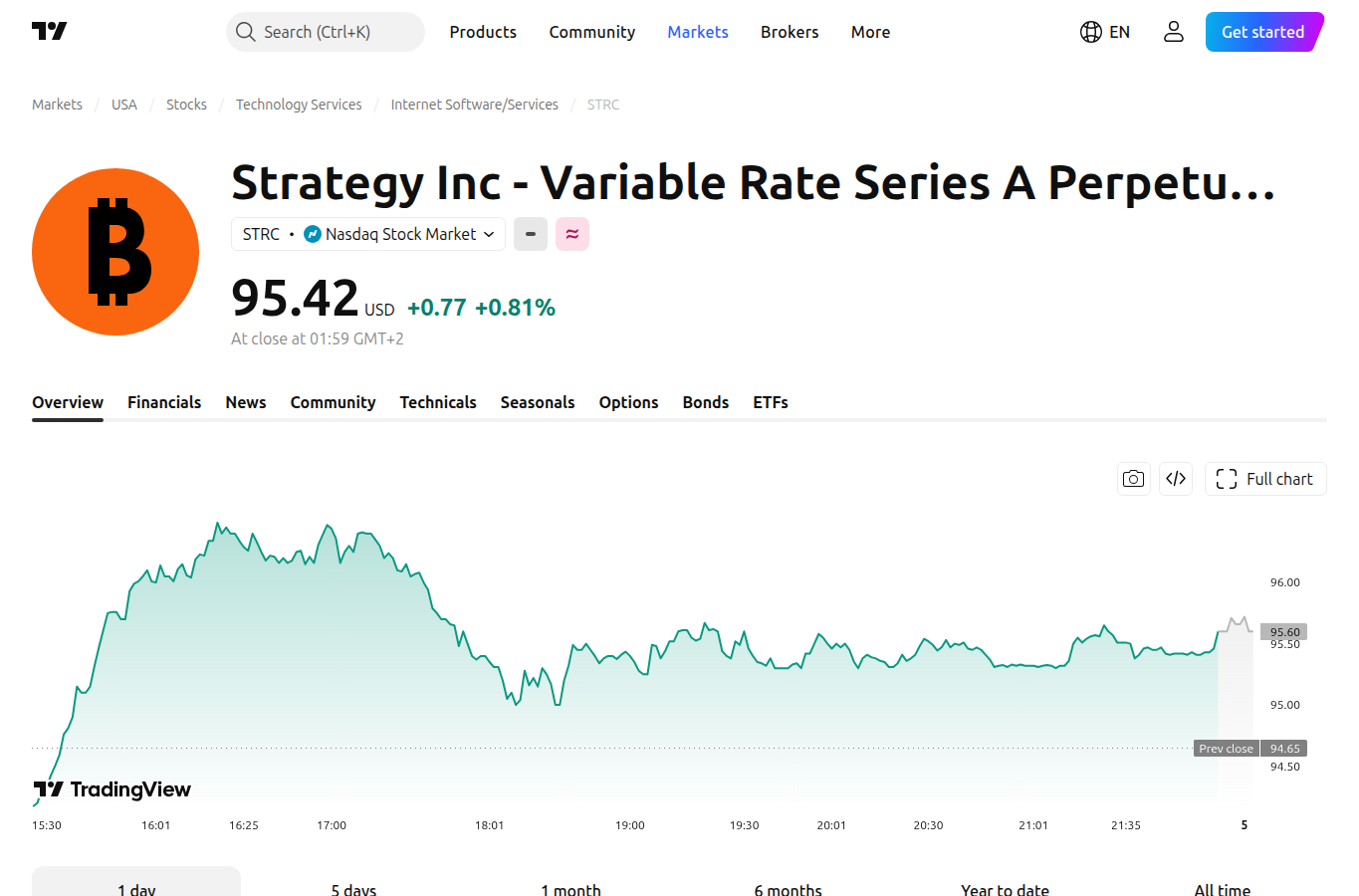
Strategy’s Bitcoin machine finally hit the part of the cycle where the structure matters more than the slogan. The company sold 32 BTC — tiny compared with its 843,706 BTC stack — but the symbolism landed hard because the whole trade has been built around one-way accumulation.
The pressure point is STRC, Strategy’s variable-rate preferred equity instrument. It is designed to trade near $100 and pay an 11.5% dividend, but it has been sitting below par, around $95. If Strategy has to raise the dividend to drag STRC back toward $100, the cash burden rises. If the cash burden rises, investors start asking whether more Bitcoin sales become part of the funding stack.
That is why the reaction to 32 BTC mattered more than the number itself. This is the same fragile setup we flagged when Bitcoin leverage crowded the $80K fight: when positioning does too much of the work, small signals can punch above their weight. Strategy did not dump its treasury, but it did break the spell of “never sell.”

Polymarket’s Strategy Fight Shows How Messy “Truth Markets” Can Get
Polymarket’s Strategy market turned into a prediction-market rules fight: did Strategy sell Bitcoin by May 31, or did the market require that sale to be publicly confirmed by then?
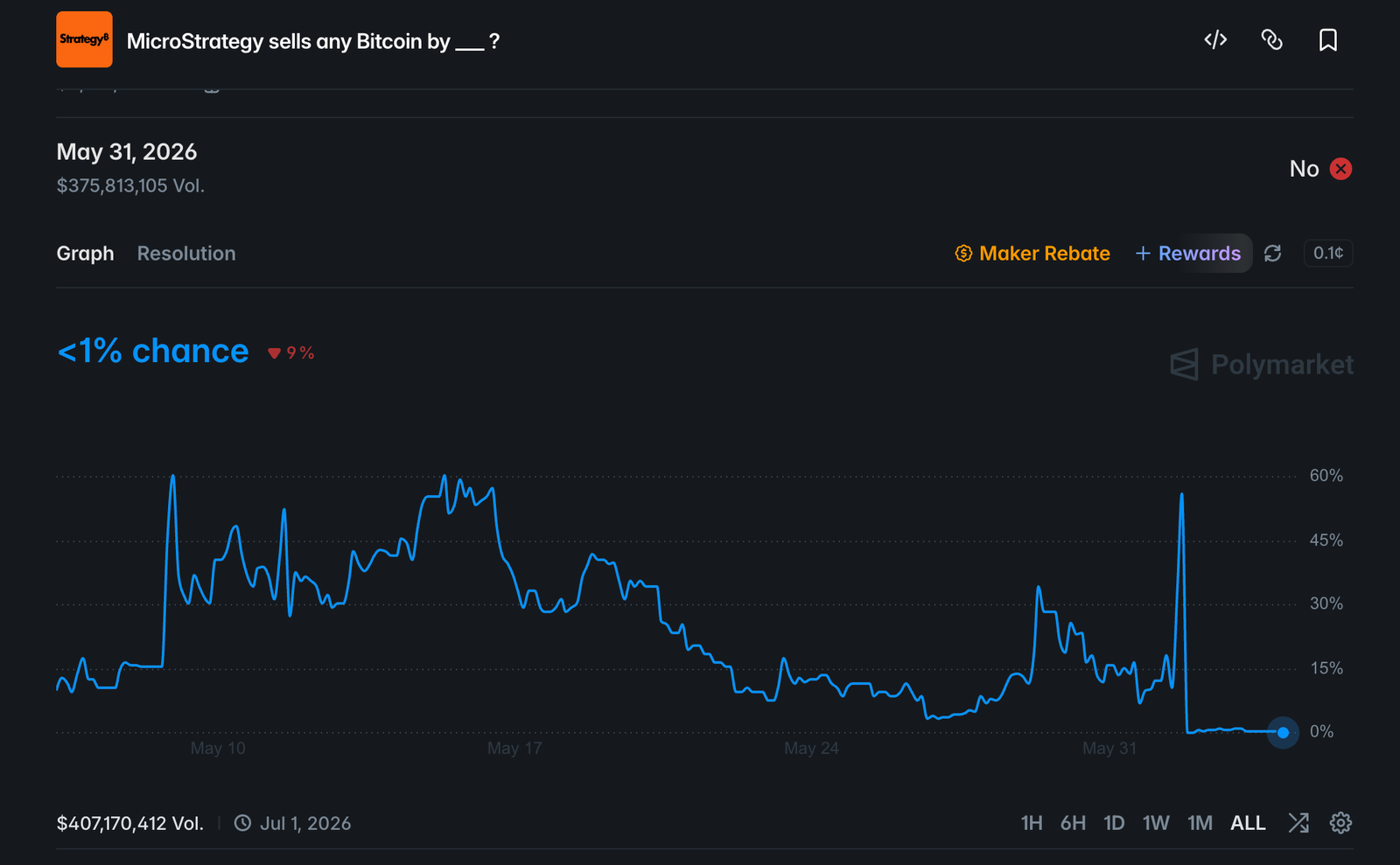
UMA’s final review upheld “No,” with 98.6% of voting power backing the outcome, even though Strategy later disclosed that it had sold 32 BTC between May 26 and May 31.
That is why traders are angry. The market question appeared to ask whether Strategy would sell Bitcoin by the deadline. The filing showed the sale happened before the deadline. But the clarification treated confirmation outside the market’s time frame as not qualifying, turning the dispute from “what happened?” into “what counted as valid confirmation?”
That is the real editorial hook. Prediction markets sell themselves as clean truth machines, but this dispute shows the messy part: when real money meets ambiguous wording, the oracle is not just reporting reality — it is choosing the rulebook. We saw the same trust problem from a different angle when an oracle scare became less about one wallet incident and more about whether users still trusted the infrastructure layer.
Meme of the day

Follow @byte_and_block for bite-sized insights, or subscribe to the newsletter for deeper dives.
If this helped you cut through the noise, join hundreds of readers who get Byte & Block in their inbox every morning
Subscribe to our newsletter!