News Byte – 14.07.2026

By Byte & Block — exploring the building blocks of digital finance.
Today’s Menu
- Witt leaves during CLARITY sprint
- BitMine buys into ETH demand
- Bitcoin leverage makes liquidations matter

Witt’s Military Leave Hits the CLARITY Clock
Patrick Witt is stepping away at exactly the kind of moment Washington loves to make messy.

The White House crypto adviser is expected to wrap his current work before heading into several months of Georgia Army National Guard JAG training. On paper, that is a personnel note. In practice, it lands right as the CLARITY Act is trying to survive a compressed Senate clock before the Aug. 8 recess.
Witt’s own post gives the timing problem cleanly: this is supposed to be a critical week for market-structure legislation, not another stretch of delay and handoff risk.
The important part is not whether one adviser disappears and the whole machine stops. Deputy director Harry Jung is expected to cover the role. The sharper point is that contested crypto bills depend on operators who can keep banking groups, crypto firms, ethics language, stablecoin-yield fights, and law-enforcement concerns moving through the same narrow hallway.
That is the same Washington bottleneck we saw when Circle’s trust-bank approval moved USDC deeper into the regulated stack: the crypto story is no longer just product launches, it is who gets the official rails, and how fast the rules can catch up.
That is why this story matters. Crypto policy has momentum, but momentum is not the same thing as execution. A bill can have support, headlines, and industry pressure behind it, then still lose altitude because the calendar gets tight and the people managing the trade-offs change mid-sprint.

BitMine’s ETH Buy Is Really a Robinhood Chain Bet
BitMine bought more ETH, but the interesting part is not just the size of the bag.
The company added 27,801 ETH, worth about $49 million, taking its stack to roughly 5.77 million ETH. That is nearly 4.8% of circulating supply, which is already a ridiculous number for a corporate treasury story. But Tom Lee’s argument is less “we bought the dip” and more “Ethereum is becoming consumer-finance infrastructure.”
The buy has a clean news peg, and the market did not exactly throw a parade around it.
That muted reaction is useful. It keeps the story away from treasury-coin victory-lap mode and closer to the real question: what kind of demand is BitMine underwriting?
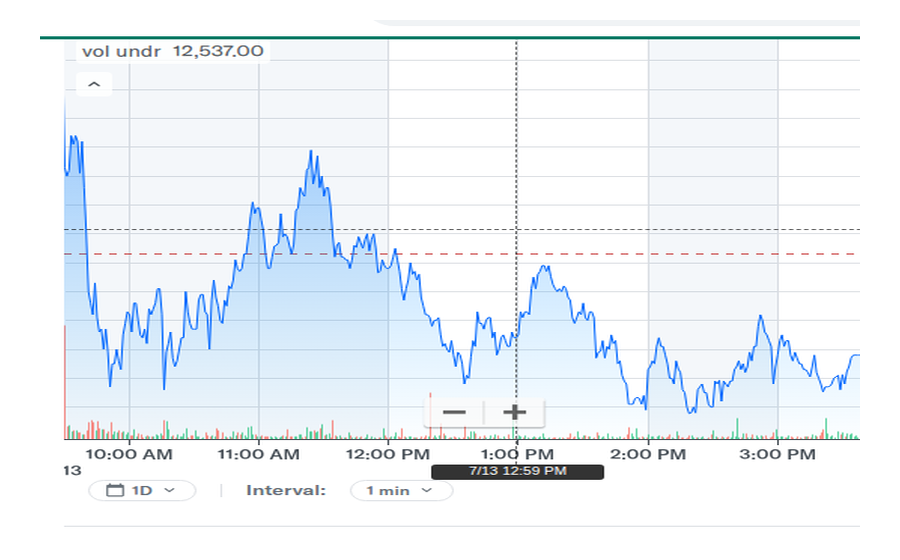
Robinhood Chain is the key context. Early activity on Arbitrum gives the ETH thesis a more practical wrapper: brokerage distribution, tokenized assets, fees paid in ETH, and DEX volume that already has real numbers attached.
The Robinhood Chain explainer matters because it shows the network as a live EVM venue, not just a slide in an investor deck.
This builds on the same BitMine setup we covered last week: ETH is not being treated like a passive treasury souvenir, but as something that can be bought, staked, and plugged into a broader corporate infrastructure thesis.
The tension is that ETH treasury buyers may be pricing usage before ETH itself looks exciting on the chart. That makes BitMine less like another company buying crypto for attention and more like a bet that consumer trading rails can turn ETH demand into something steadier than a rotation trade.

Bitcoin’s Liquidation Flush Is an Open-Interest Story
Bitcoin price gets the headline. Open interest explains why the move can get ugly.
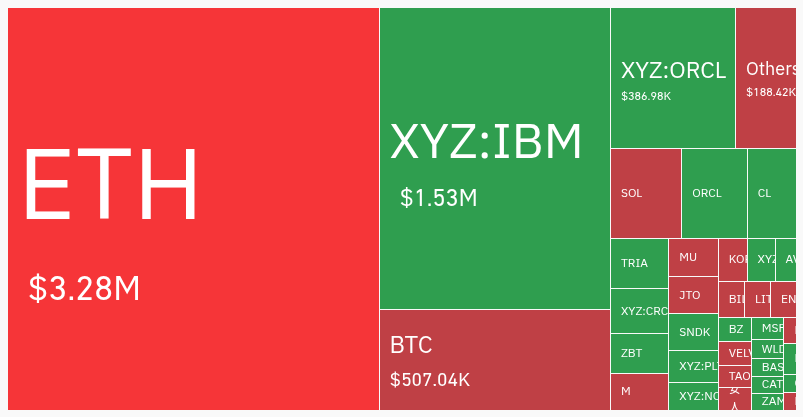
The latest liquidation flush wiped out more than $600 million in leveraged longs, with roughly $336 million tied to Bitcoin and nearly $189 million tied to Ethereum. That is not just “traders got wrecked” trivia. It is a reminder that crowded exposure can make a normal pullback behave like someone pulled the floor out.
Open interest is the useful lens because it does not tell you whether the market is bullish or bearish. It tells you how much unresolved leverage is still sitting in the system. When that rises alongside aggressive funding, traders are paying to keep longs open, and a modest reversal can turn into forced selling fast.
The heatmap is the point here: the market does not need a massive macro shock when enough leverage is already stacked in the wrong place.
ETF flows can show where spot demand is coming from, but open interest shows how much leverage is stacked around the trade. Put together, they tell a cleaner story than price alone: who is buying, and how crowded the bet has become.
That is the reader takeaway. Price tells you where Bitcoin is. Open interest tells you how fragile the position around that price might be. The October 2025 liquidation wave, when more than $19 billion was wiped out and perpetual open interest collapsed by about 43%, is the warning label. Leverage does not just follow volatility. Sometimes it manufactures it.
Meme of the day

Follow @byte_and_block for bite-sized insights, or subscribe to the newsletter for deeper dives.
If this helped you cut through the noise, join hundreds of readers who get Byte & Block in their inbox every morning
Subscribe to our newsletter!