
News Byte – 31.05.2026

By Byte & Block — exploring the building blocks of digital finance.
Today’s Menu
- Circle’s USDC freeze warning
- Lummis’s China rulebook alarm
- Bitcoin dip buyers look thin

Circle Froze $12.6M in USDC. The Reason Matters More Than the Number
Circle froze $12.6 million in USDC tied to Zama’s confidential USDC smart contract, and the market should care less about the dollar amount than the control surface it exposes. Stablecoins already sit inside the plumbing of the digital economy; this freeze is a reminder that some of that plumbing still has issuer-controlled shutoff valves.
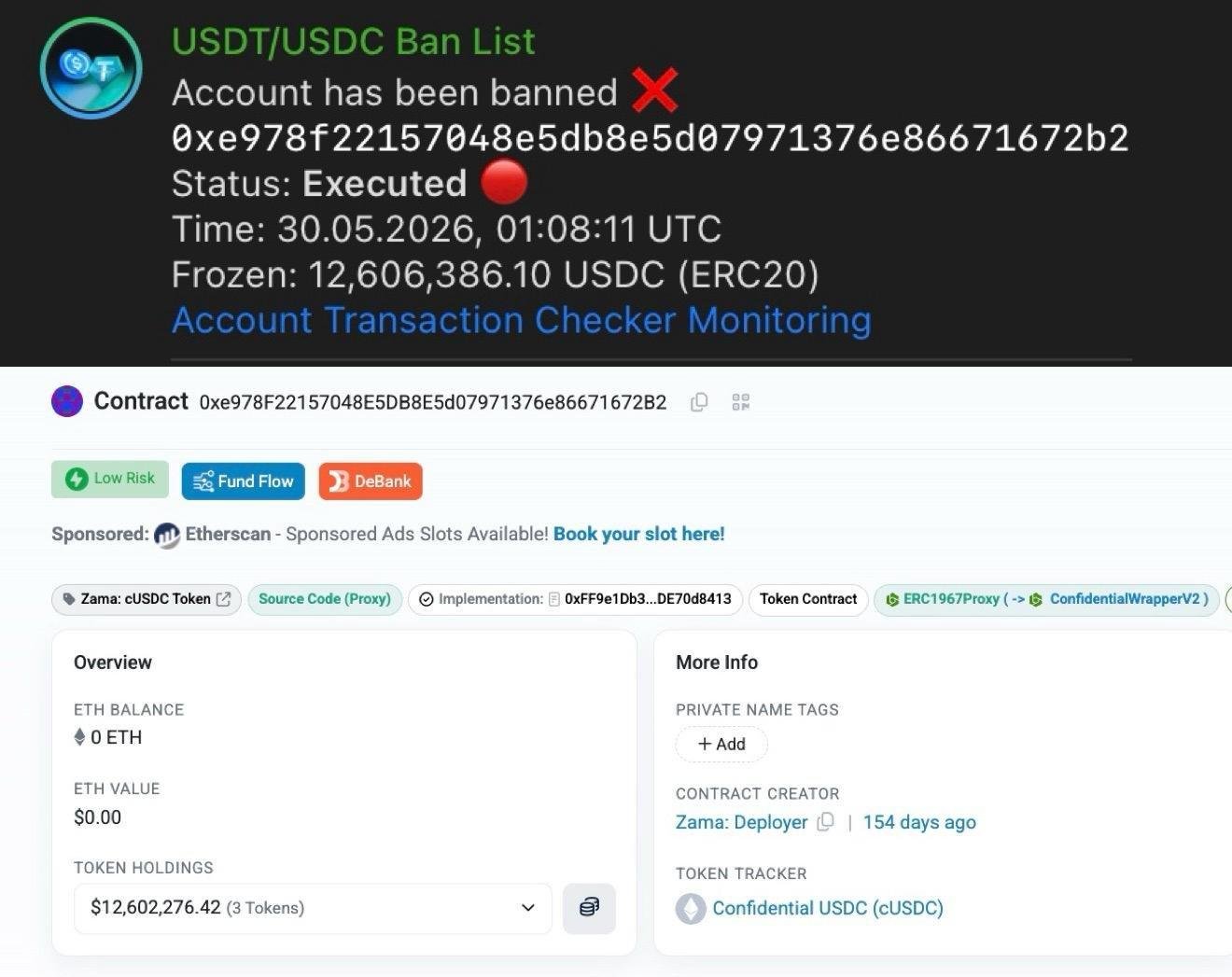
The freeze hit funds connected to a privacy protocol where assets can be commingled, meaning the blunt compliance action did not only read like a clean bad-wallet blacklist. Wallets linked to Overnight Finance deposited $12.4 million into Zama on May 11, after Overnight token holders had been arguing over a treasury-distribution vote and rug-pull allegations. Circle’s exact reason was still unclear, and Zama apparently was not notified before the freeze.
That is the uncomfortable part: stablecoins are marketed as clean, liquid dollars for crypto rails, but the issuer still holds a very real emergency brake, and users rarely know where that brake will be applied next. Circle has also been criticized from both directions — too slow to freeze funds after major hacks, too aggressive when legitimate operators get caught in legal or compliance dragnet. This is the stablecoin tradeoff in one paragraph: regulated dollars onchain, with issuer discretion sitting underneath.

China Wins the Next Financial Era if the US Fumbles Crypto Regulation — Lummis
Cynthia Lummis is framing the CLARITY Act as more than another crypto bill. Her argument is that if the United States does not define the rules for digital assets, someone else will — and Beijing is the obvious political foil. The warning lands because the market-structure fight is no longer just about token listings or agency turf. As we saw last time CLARITY moved out of committee, the clean headline is only the start; the real fight is over what kind of crypto rulebook Washington is willing to write.
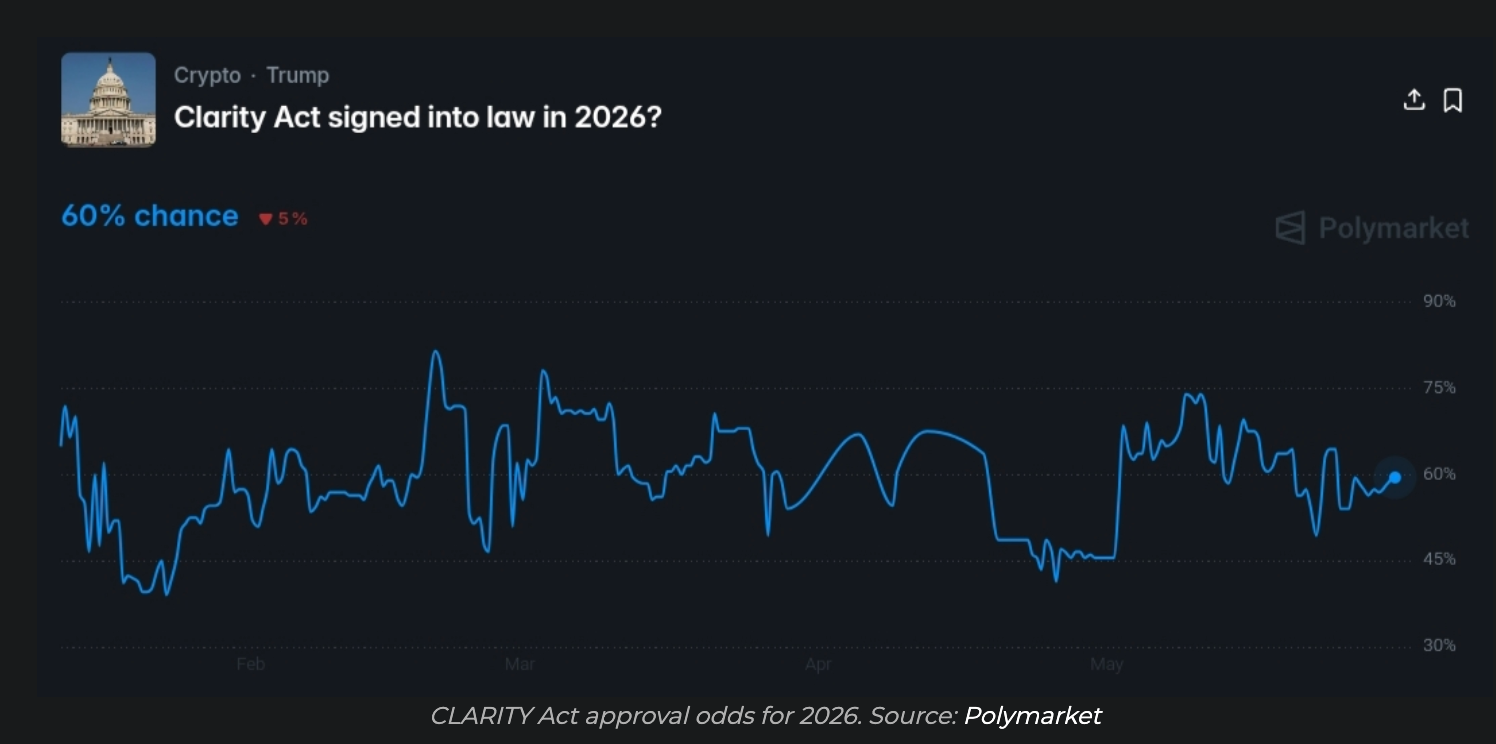
The Senate Banking Committee has advanced the bill, reviving industry hopes after months of delay, but the window is still narrow. Banks are pushing back, with Jamie Dimon objecting to crypto companies being able to pay interest on deposits without bank-style capital and AML rules. Lummis has warned that if the bill misses 2026, the next realistic window may not open until 2030. In her own post, she framed the fight as a race to set the global standard before adversaries write the rules of the next financial era.
That makes the politics unusually market-relevant: every delay extends the gray zone for exchanges, DeFi, stablecoins, and institutions that need compliance clarity before committing serious capital. Crypto does not wait for Washington’s calendar, and neither do rival financial centers, especially when Lummis is explicitly warning that America needs to build the next dollar-dominated system before Beijing does.

Dip Buyers Are Back, but the Volume Tells a Different Story
Bitcoin dip buyers are showing up, but not with the kind of force that ends a downtrend by itself. After two heavy weeks of ETF selling — $1.42 billion of outflows after $1.26 billion the prior week — BTC slid toward $72,500 and revived fears of a return to the old $60,000-$70,000 range. That matters because ETF flows are Bitcoin demand wearing a name tag, and right now that name tag is not saying “clean reversal” yet.
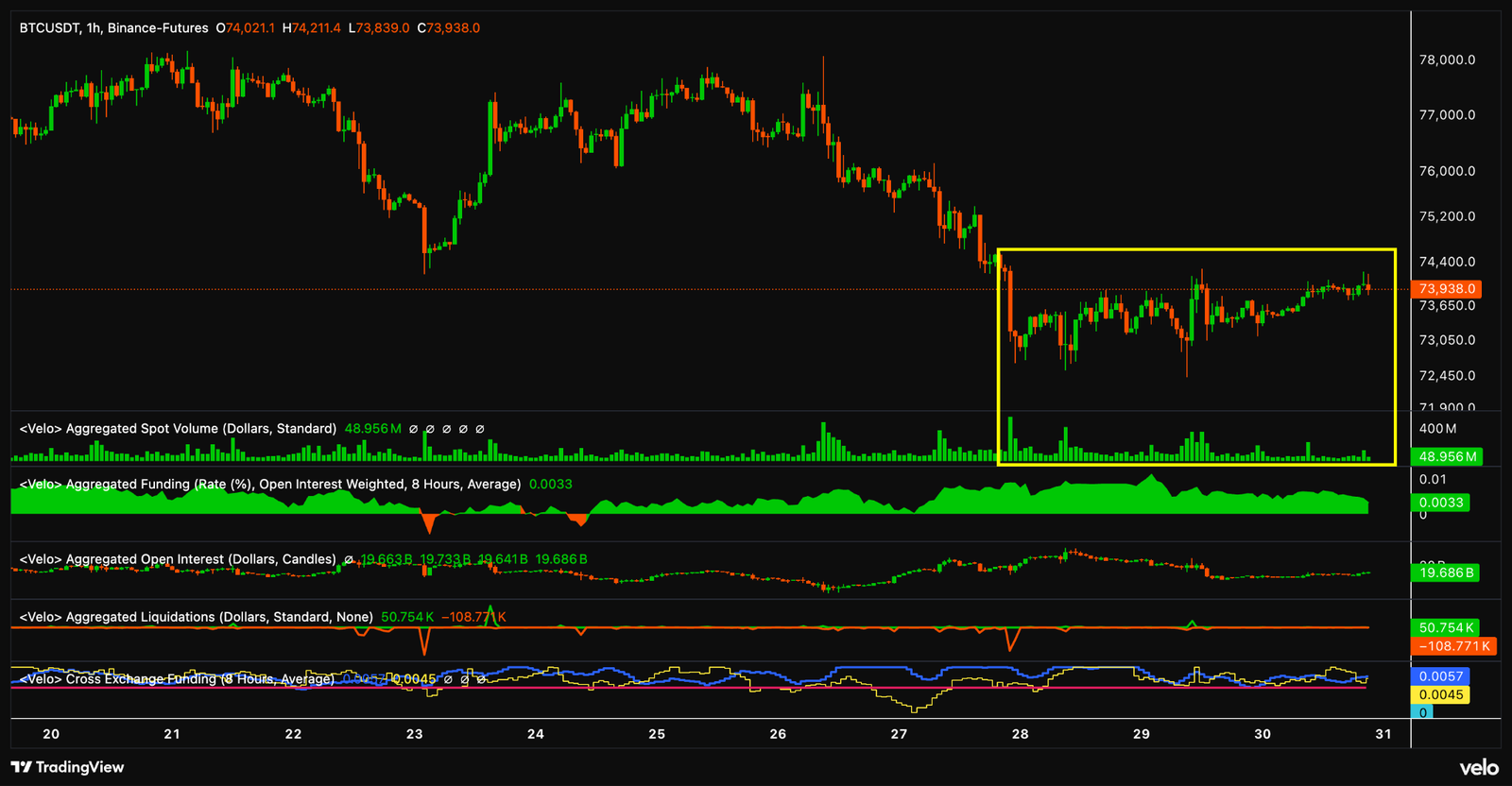
Spot buying did appear near support, and order-book data showed bids building below $75,000, which is why the market has not simply fallen apart. The problem is that absorption is not the same thing as control. Spot CVD suggested buyers were present but not dominant, while nearly $300 million of open interest clustered around $73,000-$74,000 showed leveraged longs trying to catch the move.
That can stabilize price for a while, but it also leaves the market exposed if ETF outflows, Coinbase inflows, or futures liquidations keep leaning the other way. The cleaner read: buyers see a discount, but the bid is still defensive, hesitant, and heavily dependent on whether forced selling cools off. Hyblock’s own post framed the setup as early signs of strength, which fits the “buyers are here, but not yet dominant” read.
Bitcoin likely needs stronger spot demand or a fresh catalyst before this looks like accumulation rather than damage control, especially if leveraged longs keep doing more of the work than real spot buyers.
Meme of the day
Follow @byte_and_block for bite-sized insights, or subscribe to the newsletter for deeper dives.
If this helped you cut through the noise, join hundreds of readers who get Byte & Block in their inbox every morning
Subscribe to our newsletter!