News Byte – 07.07.2026

By Byte & Block — exploring the building blocks of digital finance.
Today’s Menu
- Ctrl Wallet starts shutdown clock
- BitMine builds ETH staking stack
- Keel sells data-center pivot

Ctrl Wallet Turns Exploit Fallout Into a User Exit Clock
Ctrl Wallet is not just dealing with a security headache. It is putting users on a timer.
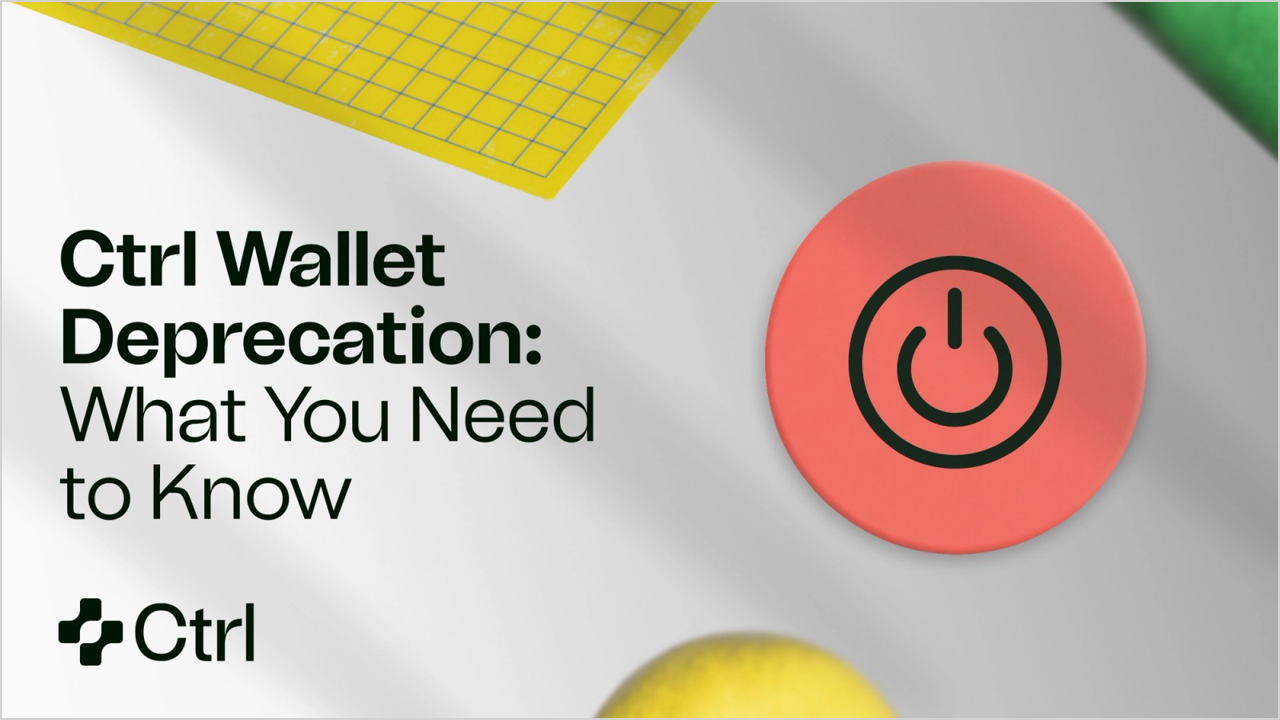
The wallet says normal app functions stop on Aug. 3. Sending, receiving, swaps, and dApp connections go away. After that, the app becomes basically one thing: a recovery-phrase export tool. That is a pretty brutal reminder that “non-custodial” does not mean “zero platform risk.” You may control the keys, but the product around those keys can still vanish, break, migrate, or turn into a last-call exit door.
The official notice is useful here because it gives the shutdown terms without the usual third-party fog.
The real story is the clock. Users have until Aug. 2 for full functionality, with the app already removed from stores on July 7 and export-only mode starting Aug. 3.
That deadline matters because this is landing after a messy Cardano-wallet exploit path tied to the broader Emurgo/SecondFi transition. Roughly 16 million ADA was involved, 374 addresses were affected, and about 129 million ADA had to be secured under emergency measures.
Wallet brands can rebrand, merge, and migrate, but users still need to know exactly where their recovery phrase works when the app disappears. That is the less glamorous side of every so-called self-custody upgrade: the user still has to survive the handoff.

BitMine’s ETH Stack Starts Looking Like a Corporate Staking Machine
BitMine is still buying ETH, and the contrast is getting harder to ignore.
The company added roughly $73 million of ETH last week, pushing its treasury to 5,742,237 ETH — more than 4.7% of circulating supply. The sharper detail is what happens after the buy button. BitMine has 4,879,157 ETH staked, which is almost 85% of the stack, with annualized staking revenue projected around $235 million.
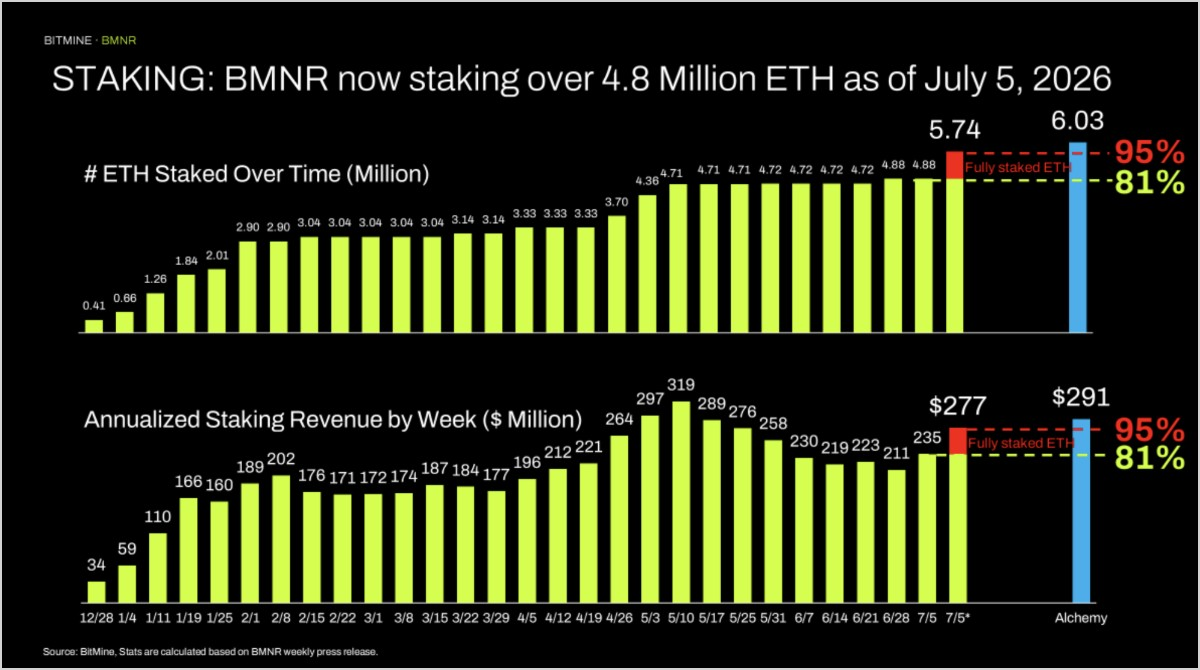
That is the real twist in BitMine’s model. The company is not just parking ETH on a balance sheet; it is leaning into the same basic idea that staking turns idle ETH into productive ETH, only at corporate-treasury scale.
The market hook is cleaner when you put it next to Strategy. While BitMine is adding ETH and staking most of it, Strategy sold $216 million of BTC to cover preferred-stock dividend obligations.
That does not kill the Bitcoin treasury trade. It just makes the next phase less cartoonishly simple. Early copycats could pitch accumulation and vibes. Now investors are asking uglier questions: What are the liabilities? What does the yield look like? Is index inclusion helping? Is there an operating model attached, or just a treasury wrapper with a ticker?
BitMine’s bet is that ETH can be both a balance-sheet asset and infrastructure fuel. That is more interesting than another “company buys crypto” headline.

Keel Shows the Miner-to-Data-Center Trade Is Still Alive
Keel is another former miner trying very hard not to sound like a miner anymore. The market seems fine with that.
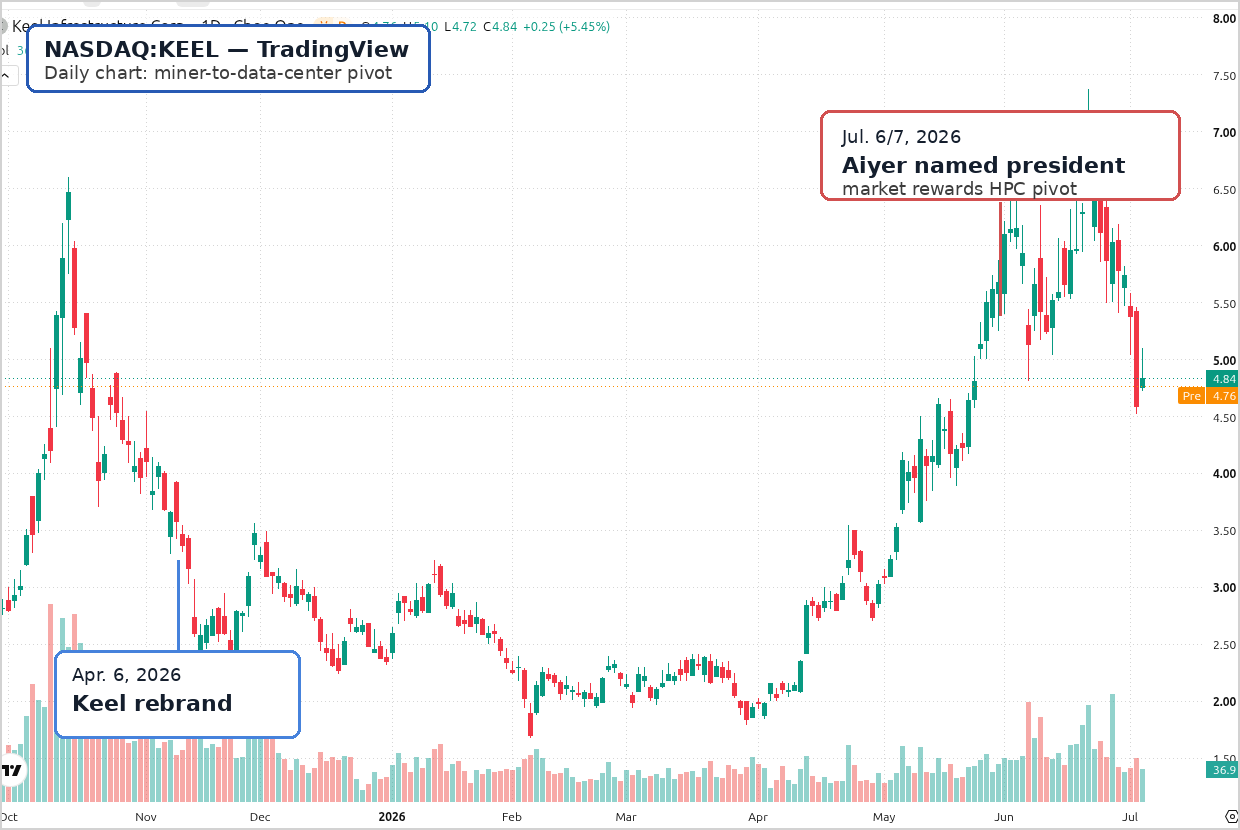
The stock jumped after the company hired Ganesh Aiyer as president, a data-center veteran from Digital Realty. That résumé matters because investors are not just rewarding hash rate right now. They are rewarding power access, commercial execution, and the ability to convince the market that yesterday’s Bitcoin-mining footprint can become tomorrow’s AI/HPC infrastructure.
The news hook is simple enough: one hire, one stock pop, one more signal that miners are being judged by their pivot credibility.
The bigger tell is the chart. Keel shares were already up more than 120% since the April 6 rebrand, so this is not a random one-day enthusiasm candle. It is a market story about what kind of crypto-infrastructure company gets a premium now.
This is the same divide that keeps showing up across the sector: Bitcoin mining is splitting into two institutional stories, and Keel wants investors to believe it belongs on the infrastructure side rather than the stranded-hashrate side.
That is the bet. Not that mining is dead. More that the best multiple may now go to companies that can turn power, land, and equipment discipline into something cloud customers might actually pay for.
Meme of the day

Follow @byte_and_block for bite-sized insights, or subscribe to the newsletter for deeper dives.
If this helped you cut through the noise, join hundreds of readers who get Byte & Block in their inbox every morning
Subscribe to our newsletter!