News Byte – 18.06.2026

By Byte & Block — exploring the building blocks of digital finance.
Today’s Menu
- Aztec Labs exposes legacy contract risk
- USDGO climbs past $500M
- EarnOS bets on verified humans

Aztec Labs’ Legacy Contract Problem Gets Expensive
Aztec Labs just handed DeFi one of those uncomfortable reminders: old infrastructure does not stop mattering just because the product moved on.
A deprecated payments product was hit for roughly 1,158 ETH, 150,000 DAI, and 0.4696 renBTC — a little over $2 million depending on the price snapshot. The sharper point is that this came days after another Aztec Connect exploit around the same size. Two legacy-contract hits in one week is not a great look for the “sunset but still holding funds” category.
The useful angle here is not “Aztec got hacked again” in isolation. It is the long-tail risk of immutable contracts still holding real user assets after a product has been sunset. If users start treating this as more than one ugly legacy-contract failure, the real damage is the wider confidence shock that spreads across DeFi every time “deprecated” still means “holding funds.”
Aztec Labs’ own framing matters because it confirms the awkward part: the affected system was immutable, deprecated, and not something the team could pause or upgrade. SlowMist adds the exploit mechanics, pointing to spoofed proof data and weak validation in the escape-hatch withdrawal path.
That leaves the sticky takeaway. DeFi has gotten much better at launching new systems. It is still awkwardly bad at retiring the old ones without leaving money behind.

USDGO’s $500M Step Is a Stablecoin Plumbing Story

Stablecoin growth usually gets framed as a two-name race: Tether for offshore scale, Circle for regulated distribution. USDGO crossing $500 million in circulation is interesting because it sits in a quieter middle lane — enterprise payments, regulated issuance, and tokenized reserve plumbing rather than consumer crypto branding.
The milestone came roughly four months after launch, with USDGO positioned as a 1:1 dollar-backed stablecoin issued by Anchorage Digital Bank and operated/distributed by OSL. That is why USDGO’s milestone lands as more than a supply number: it plugs into the same bigger shift toward stablecoins as payment infrastructure, only with a heavier enterprise and compliance wrapper.
The reserve stack is the part that keeps this from being another “new stablecoin number goes up” item. The backing mix includes cash and short-term Treasuries, plus tokenized fund exposure including BlackRock’s BUIDL, Goldman Sachs’ STBXX, and JPMorgan’s JLTXX as reserve asset sources.
That is a very institutional flavor of stablecoin growth: less casino liquidity, more settlement rail with a compliance wrapper. Tether and Circle still dominate the scoreboard. But USDGO’s rise hints at a different game underneath: enterprise stablecoins trying to become payment infrastructure before most crypto users even notice they exist. If that works, the next stablecoin fight may be won in back-office payment flows before it ever trends on crypto Twitter.

EarnOS Wants to Pay Humans, Not Bots
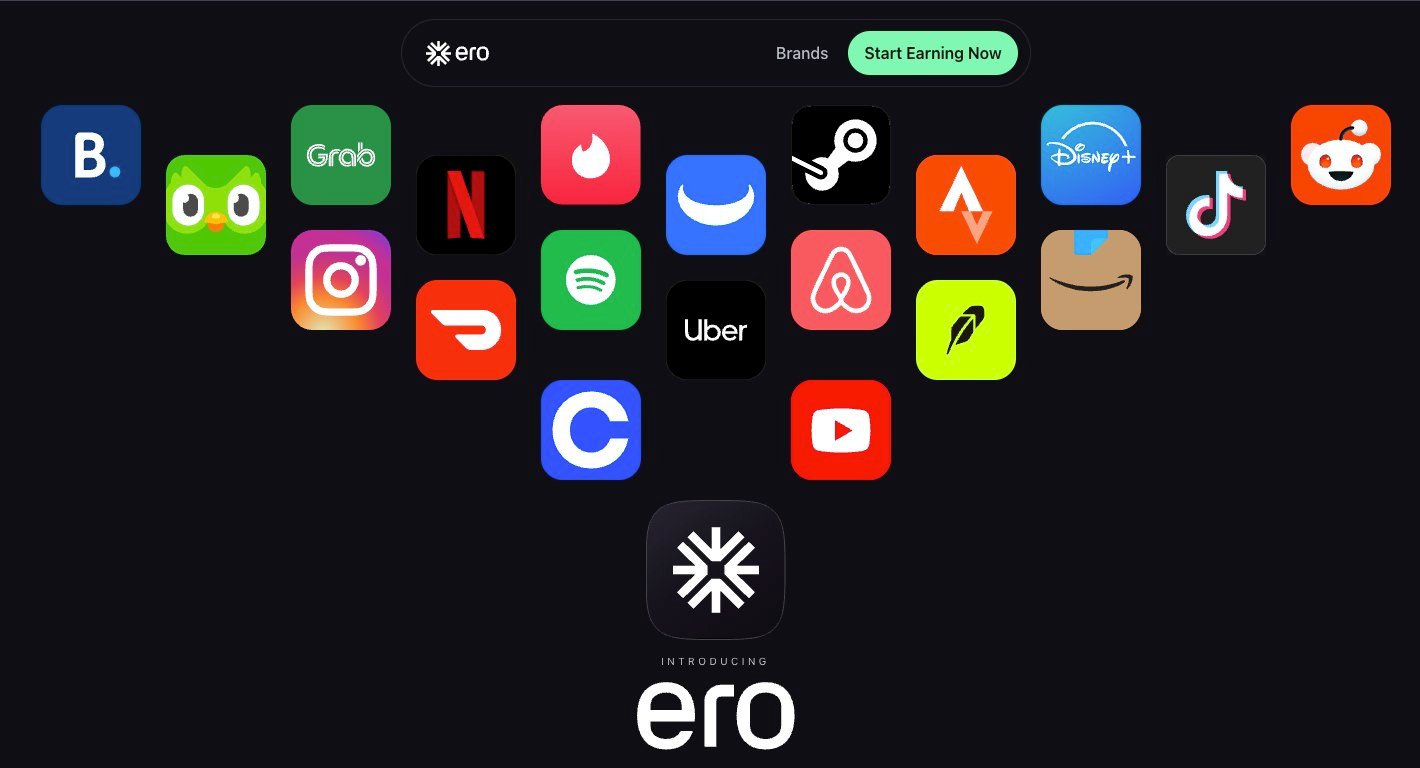
EarnOS is pitching a very 2026 crypto problem: if the internet is filling up with bots and AI slop, how do brands know they are paying to reach humans? Its answer is Ero, a mobile app that pays users for proving they are real people and engaging with brand campaigns.
The funding makes the story worth watching. EarnOS raised a $6 million Pre-Series A led by 1kx with Coinbase Ventures and Circle Ventures involved, alongside a $12.5 million four-year strategic investment from Verona. Users can earn rewards for brand interactions, with rewards distributed in a USD stablecoin and spendable through an EarnOS Visa card. That makes EarnOS part of a wider push to tuck crypto into broader consumer experiences, where the stablecoin rail matters less as a slogan and more as the invisible payout layer.
The bigger question is whether this becomes useful consumer infrastructure or just another attention marketplace dressed in Web3 clothes. The timing helps EarnOS: bot traffic is no longer a niche ad-tech complaint, and brands are desperate for cleaner signals.
If crypto can make the payout layer invisible enough, this is one of the rare AI-adjacent stories where stablecoins might actually feel practical instead of forced. The pitch is not “come use crypto.” It is: prove you are human, do the task, get paid. That is much easier to understand.
Meme of the day

Follow @byte_and_block for bite-sized insights, or subscribe to the newsletter for deeper dives.
If this helped you cut through the noise, join hundreds of readers who get Byte & Block in their inbox every morning
Subscribe to our newsletter!