
News Byte – 05.07.2026

By Byte & Block — exploring the building blocks of digital finance.
Today’s Menu
- Binance ETH withdrawals spike
- South Africa sharpens crypto tax
- Bitcoin deposits flash volatility

Binance ETH Withdrawals Are Flashing Something Bigger
Binance is suddenly wearing the exchange-flow spotlight again. Weekly net outflows reached $1.23 billion for the week beginning June 29, more than triple the roughly $400 million seen the week before. Monthly net outflows landed around $3.2 billion, while the wider exchange list shows money moving out of several major centralized venues rather than one isolated platform wobble.
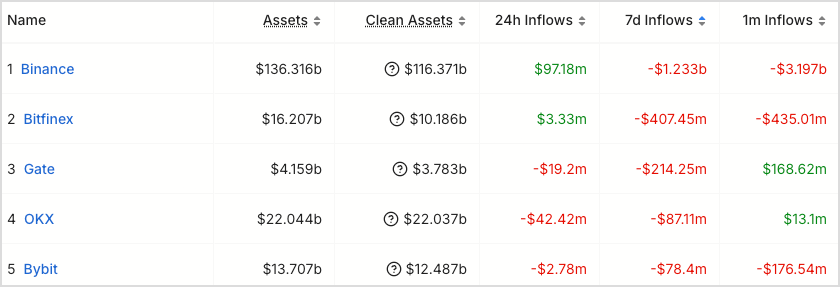
The ETH-specific signal is sharper. Binance logged more than 166,000 Ethereum withdrawal transactions in a single day, the highest level in over three years. That does not automatically mean “bullish accumulation.” Some of the move can be explained by MiCA confusion, self-custody, and funds rotating into DeFi for yield. But the size of the spike still matters because it happened while ETH was bouncing from a bruising drawdown.
The move reads less like simple panic and more like ETH holders weighing custody and yield — the same practical split behind staking ETH instead of leaving it idle.
So the useful read is not “everyone is panic-withdrawing” or “everyone is buying.” It is that holders are choosing not to leave ETH sitting on the biggest exchange while regulation, yield, and price recovery all collide. That is exactly the kind of flow shift that can matter before price fully explains it.

South Africa Wants Crypto Inside the Tax Net

South Africa is not creating a brand-new crypto tax universe. It is doing something more practical, and probably more annoying for users: fitting crypto into the existing income tax and capital gains framework. The draft guidance treats crypto assets as intangible assets, not legal tender or foreign currency, and says trading, swapping, spending, mining, and receiving crypto can all become taxable events depending on the facts.
The key word is “intention.” A long-term holder and an active trader may face very different treatment, even if both touch the same assets. Transaction frequency, behavior, purpose, and timing all matter. That makes the guidance less like a simple checklist and more like a warning that crypto users need records good enough to explain what they were actually doing.
It fits the same broader pattern of crypto policy whiplash: governments want activity inside the perimeter, but the rules still land unevenly on users and builders.
The scale is not tiny either. SARS has said at least 5.8 million South Africans held crypto assets as of 2024, and public comments on the draft remain open until August 31. The signal is clear: crypto is being pulled into the normal tax perimeter, and the messy part is proving which side of that perimeter each transaction belongs on.

Bitcoin Deposits Are Warning Before Price Does

Bitcoin deposits to centralized exchanges jumped to nearly 50,000 BTC per day over the past week, which is not the kind of flow you ignore when price is already leaning on support. Exchange deposits are not guaranteed selling, but they usually mean coins are being repositioned for a reason. When that reason arrives near a fragile level, volatility tends to get louder.
The average deposit size also doubled from roughly 1 BTC to about 2 BTC. That points away from small retail churn and toward whales or institutional-sized players moving supply. The market risk is straightforward: if Bitcoin cannot defend the $60,000 area, the next level traders keep circling is around $53,000, close to realized price.
That makes the deposit spike another version of the same fragile BTC structure: price can rebound, but flow signals still decide whether the bounce holds.
The uncomfortable part is that the setup is not isolated to Bitcoin. Ethereum and altcoins also saw exchange inflow pressure, which makes this feel more like broad de-risking than a single-asset wobble. Bitcoin recovered some ground, but the flow data says the market has not stopped preparing for a bigger move. That is why the deposit data matters more than the headline bounce: it shows supply moving into position before the next candle decides the mood.
Meme of the day

Follow @byte_and_block for bite-sized insights, or subscribe to the newsletter for deeper dives.
If this helped you cut through the noise, join hundreds of readers who get Byte & Block in their inbox every morning
Subscribe to our newsletter!