News Byte – 25.06.2026

By Byte & Block — exploring the building blocks of digital finance.
Today’s Menu
- AI advisers face SEC scrutiny
- Tokenized stocks show RWA maturity
- MSTR stress tests Bitcoin leverage

AI Advisers Just Got Their Accountability Test
AI financial advice is moving from novelty demo to regulated product, and Washington is starting to ask the obvious question: who is accountable when an agent starts nudging real investors? That is the tension behind the new push for SEC clarity. If an AI assistant can analyze your portfolio, suggest tax moves, and help route decisions, it is no longer just a chatbot with a finance costume.
The launch context matters, so the Coinbase post belongs in the story as an unfurled embed rather than a dead screenshot.
Coinbase put the issue in plain view with Coinbase Advisor, an AI-powered product framed as one of the first SEC-registered investment-advice experiences of its kind. The launch is useful because it shows where the market wants to go: personalized advice, faster execution, and less friction between “ask” and “act.”
That is the same trap we flagged in our AI prediction guide: AI can be useful, but confidence without accountability is where the risk starts.
The congressional pressure is not anti-AI theater. It is about whether disclosures, audit trails, suitability rules, and platform responsibility survive when the adviser is partly software. The uncomfortable bit is simple: “registered” sounds clean, but investors still need to know who monitors the agent, who catches bad output, and who pays when automated advice goes sideways. The sharper this product category gets, the less room there is for shrugging and calling it experimental.

Tokenized Stocks Are Becoming Market Plumbing
Tokenization is past the “cool wrapper” phase. The market is now arguing over where the real record of ownership should live: inside legacy custody rails with tokenized entitlements around the edges, or directly on-chain at issuance. That sounds boring until you realize it decides who controls settlement, compliance, and the shareholder ledger.
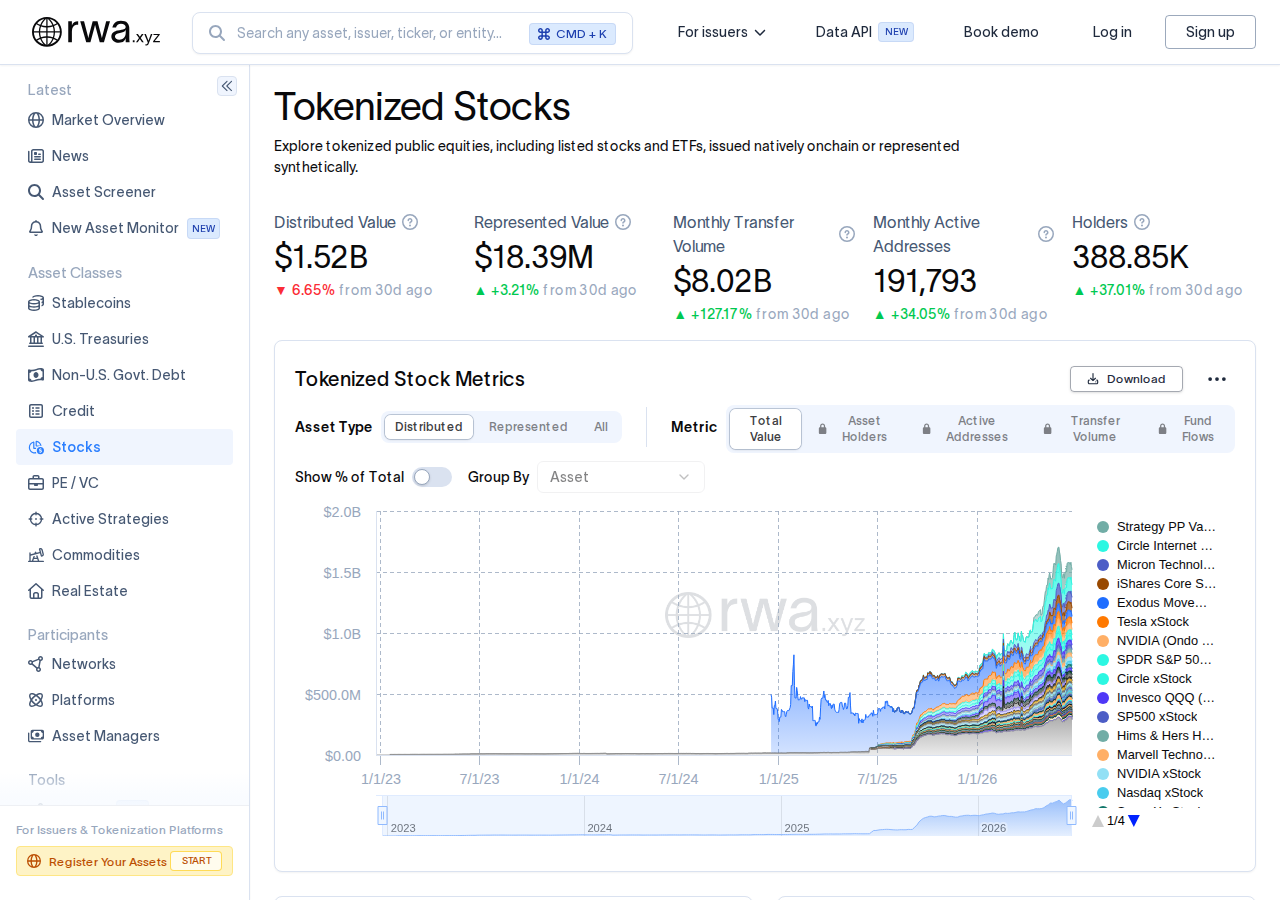
The RWA backdrop makes the argument easier to see. Tokenized stocks are no longer a brochure category; dashboards now show value, holders, activity, and a growing market map. That is why the direct-issuance debate matters. If securities are born on-chain with transfer-agent records and compliance controls baked in, tokenization becomes infrastructure instead of a wrapper skin. The dashboard is useful because it turns the argument from abstract plumbing into a visible market with users and flows.
This is the next step from the RWA shift we covered earlier: tokenization stops being a yield wrapper story and starts becoming market infrastructure.
The wrapper model still has a role, especially when big institutions want controlled pilots. But the sovereign advantage sits in the issuance layer. The closer legal ownership, compliance, and settlement move to the asset itself, the less tokenization depends on legacy plumbing pretending to be crypto-native. That is where the story gets bigger than one platform: the winner is whoever makes the recordkeeping layer feel boring enough for serious capital.

MSTR Is a Bitcoin Trade With Debt Math
Strategy still trades like a Bitcoin proxy from a distance. Up close, it is messier: common shareholders sit underneath debt, preferred equity, dividend obligations, and a funding machine that works beautifully when the premium is wide. When Bitcoin falls, the question is not just “how many coins does Strategy own?” It is who gets paid before the common stock feels the upside.
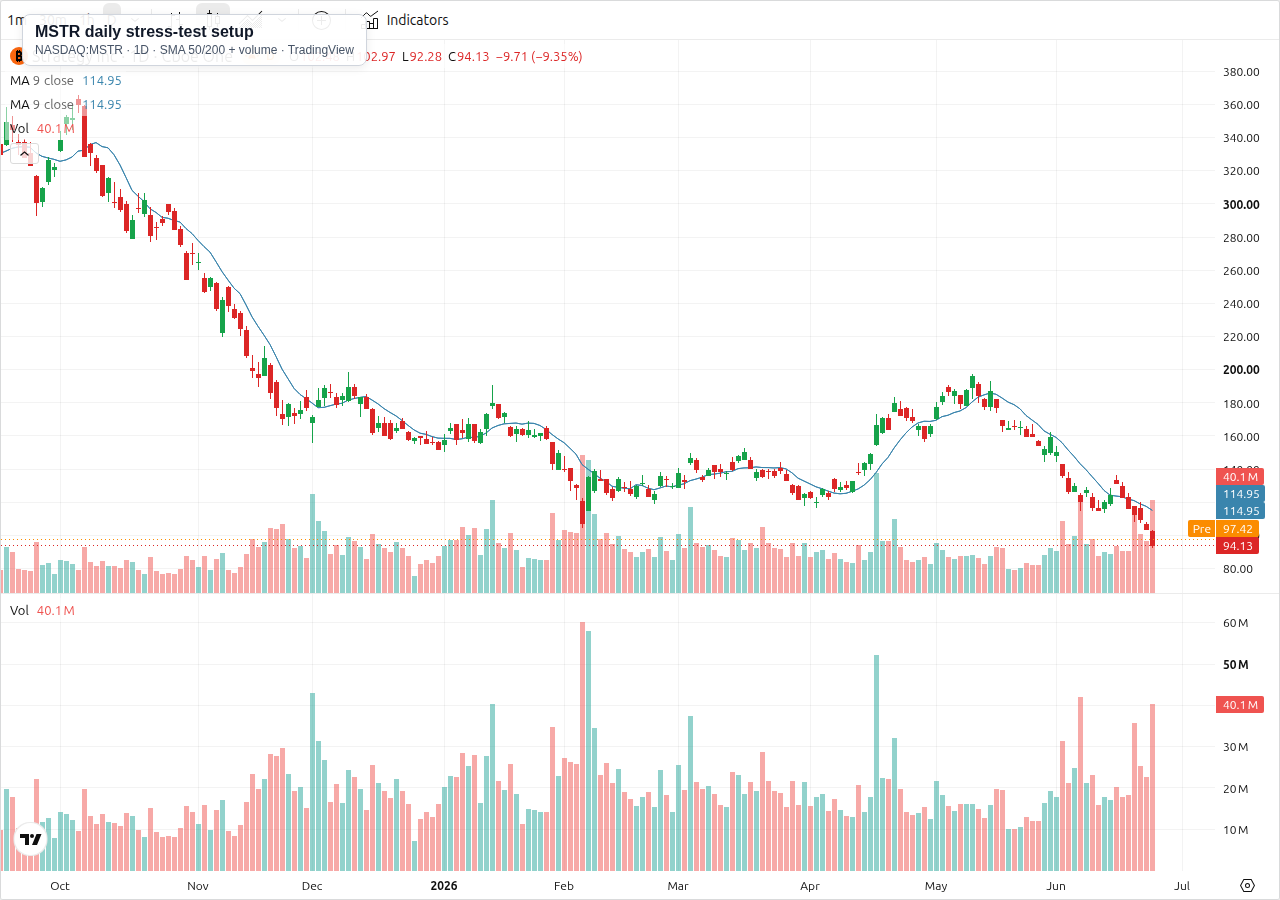
The capital stack is the story. Strategy holds a massive BTC position, but the common equity is not clean spot exposure. Convertible debt, perpetual preferreds, cash dividends, and future financing needs all sit around the Bitcoin pile. That is why a drawdown becomes a structure test, not just a price test.
We already flagged the bigger Strategy tension: every added BTC strengthens the story, but makes the vehicle more sensitive to financing, premium, and market psychology.
There is no automatic forced-sale trigger just because Bitcoin drops. The risk is slower and uglier: new capital starts funding carry instead of fresh accumulation, while the market questions whether the premium can keep doing the heavy lifting. That is how a bullish treasury machine turns into a liquidity math problem. The chart helps because it keeps the focus on the traded vehicle, not just the Bitcoin stack underneath it.
Meme of the day

Follow @byte_and_block for bite-sized insights, or subscribe to the newsletter for deeper dives.
If this helped you cut through the noise, join hundreds of readers who get Byte & Block in their inbox every morning
Subscribe to our newsletter!