News Byte – 27.05.2026

By Byte & Block — exploring the building blocks of digital finance.
Today’s Menu
- Even the ETH Bro Sold
- Crypto Companies Eyeing the Russell
- Umbra Wants to Hide $97 Billion in Token Unlocks

Even the ETH Bro Sold
David Hoffman spent years making the case that ETH was money. He just sold the rest of his stack and told his audience why the thesis played out. That is not influencer noise — Hoffman has been one of Ethereum’s loudest public bulls, and his argument is painfully specific: the network can still win while ETH itself stops getting the monetary premium holders wanted.
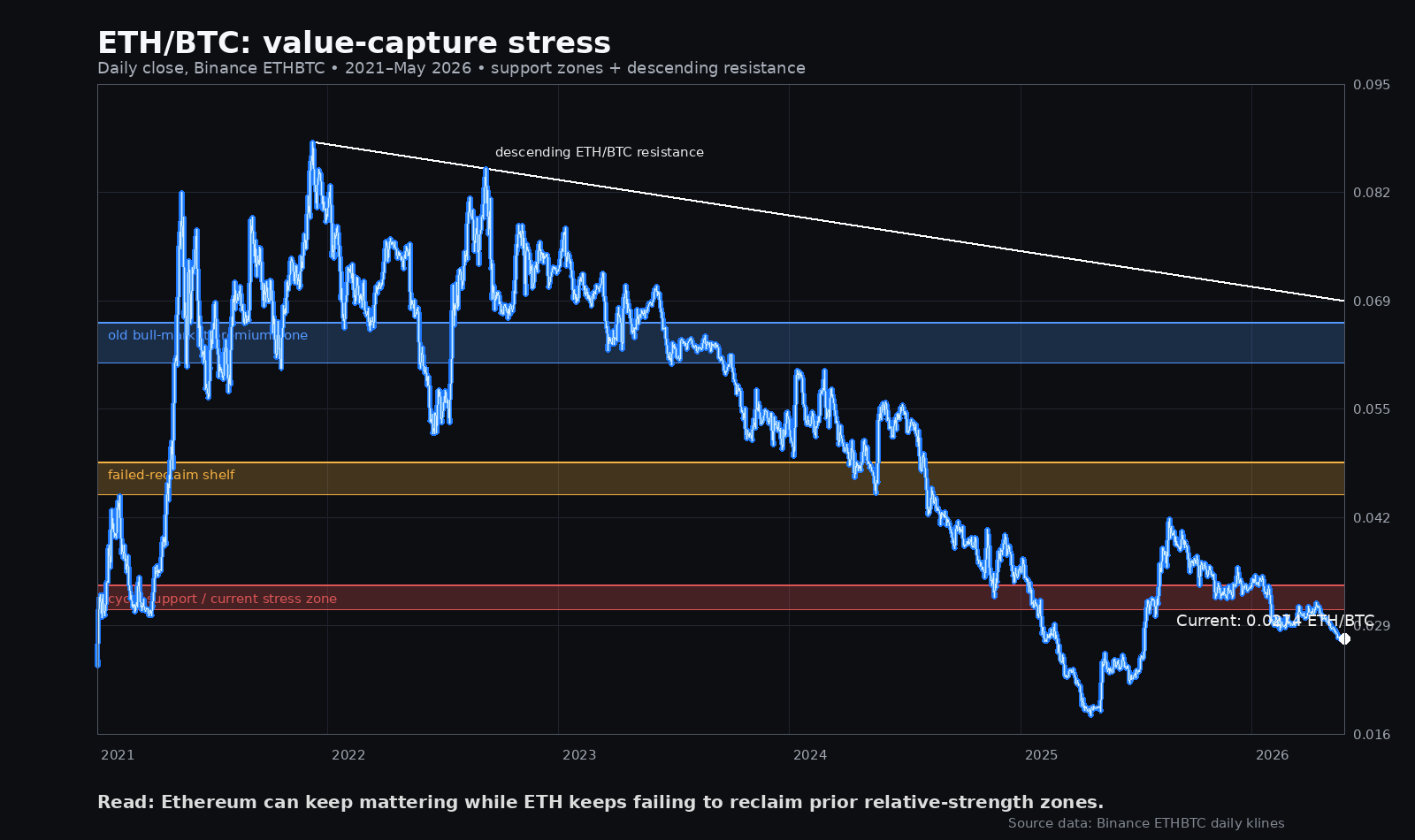
Ethereum can still win as infrastructure. Layer-2s keep absorbing activity, tokenization keeps moving onchain, apps keep shipping. And the asset can still behave like the upside has been distributed somewhere else. This is why the altseason scoreboard matters in a new way: ETH bulls need the asset to prove it can reclaim relative strength while the scoreboard keeps looking thin.

ETH can be important, useful, and still frustrating as an investment. The real question is whether it can rebuild an asset case that is not just “Ethereum matters.” Everyone already knows it matters. The missing piece is whether holders get paid for that importance without needing a perfect cycle.

Crypto Companies Eyeing the Russell
Crypto companies showing up on a preliminary Russell index list is not glamorous, but it is exactly the kind of plumbing story markets usually notice late. Sharplink, Forward Industries, Gemini, Galaxy Digital, and Bitmine are not being evaluated as crypto-native tickers in isolation — they are being checked against baskets that passive funds and benchmark-aware managers actually track.
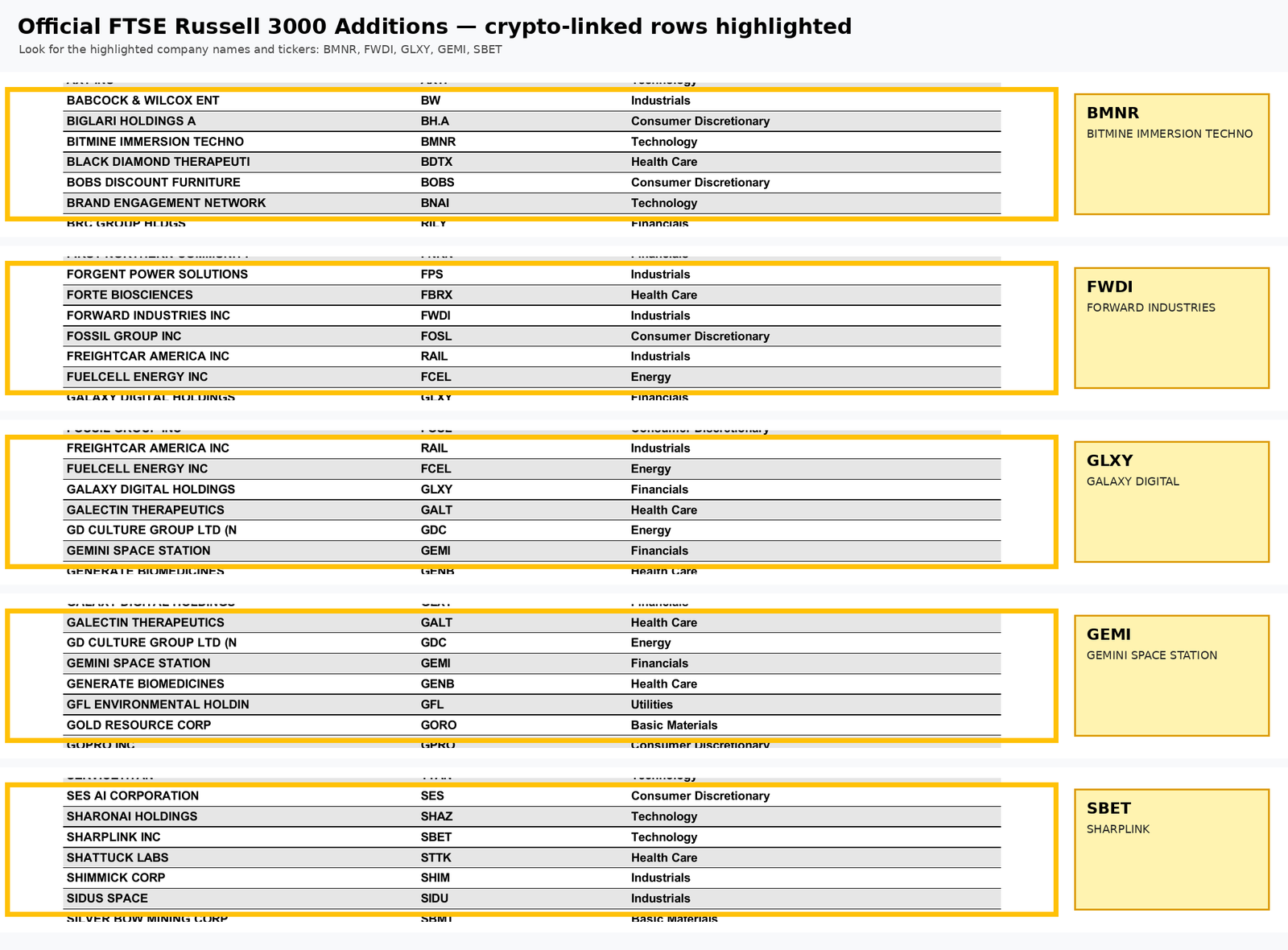
That changes the buyer base. A stock can go from “crypto trade” to “index constituent” without anyone suddenly becoming more ideological about blockchains. It is a different wrapper from spot ETFs, but the logic rhymes: crypto keeps moving toward public-market rails where institutional demand wearing a name tag becomes easier to track.
FTSE Russell’s reconstitution calendar gives this a clock — updates are expected in June, with new indexes taking effect after the market closes on June 26.

Umbra Wants to Hide $97 Billion in Token Unlocks
Token unlocks are usually treated like public weather reports: everyone sees the cliff coming, everyone pretends they are calm, and then liquidity gets weird anyway. That is why the size of the visible unlock market matters before the privacy debate even starts.
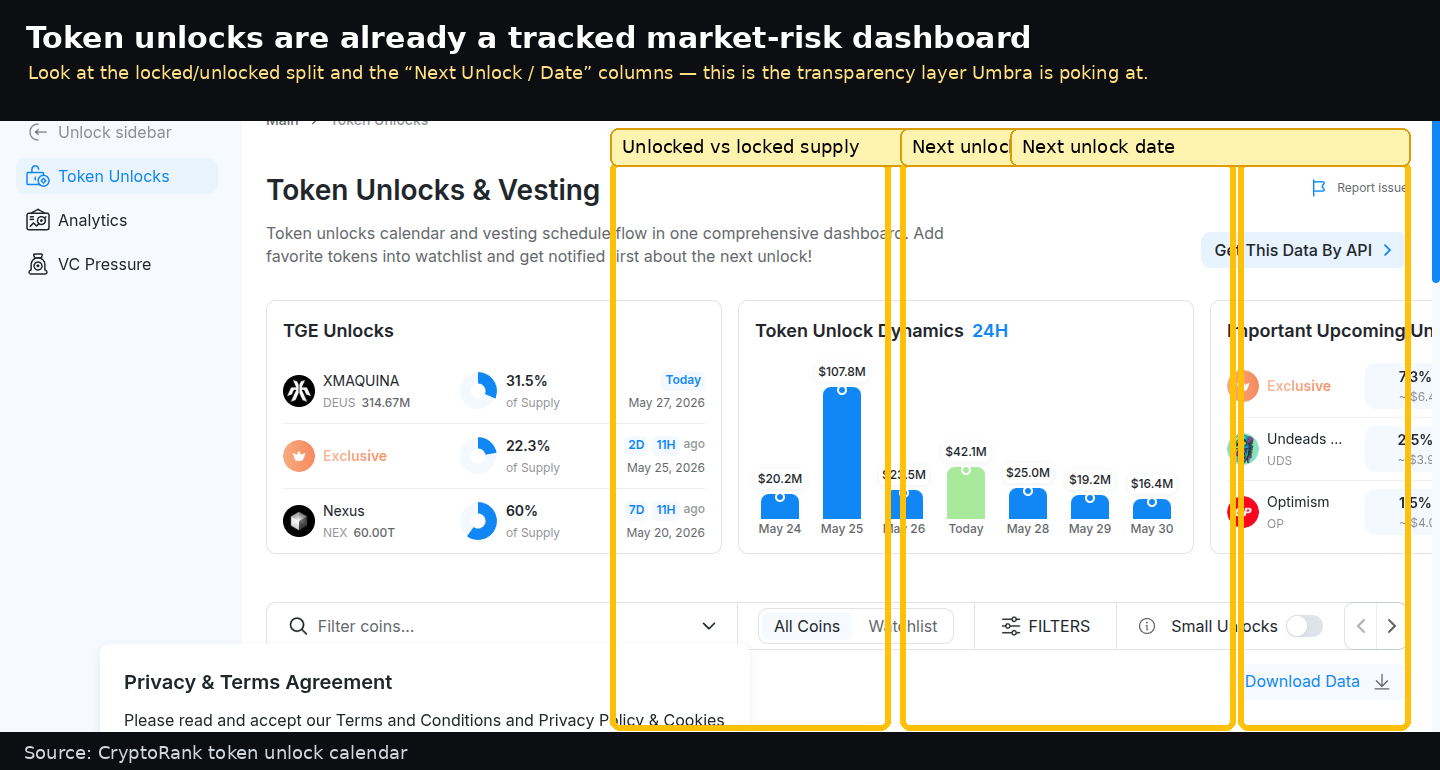
Umbra and Streamflow are trying to change that by bringing confidential vesting to Solana, targeting a token-unlock market described as roughly $97 billion. The real design question is not just how many tokens unlock, but whether they unlock as sudden cliffs or controlled drips.
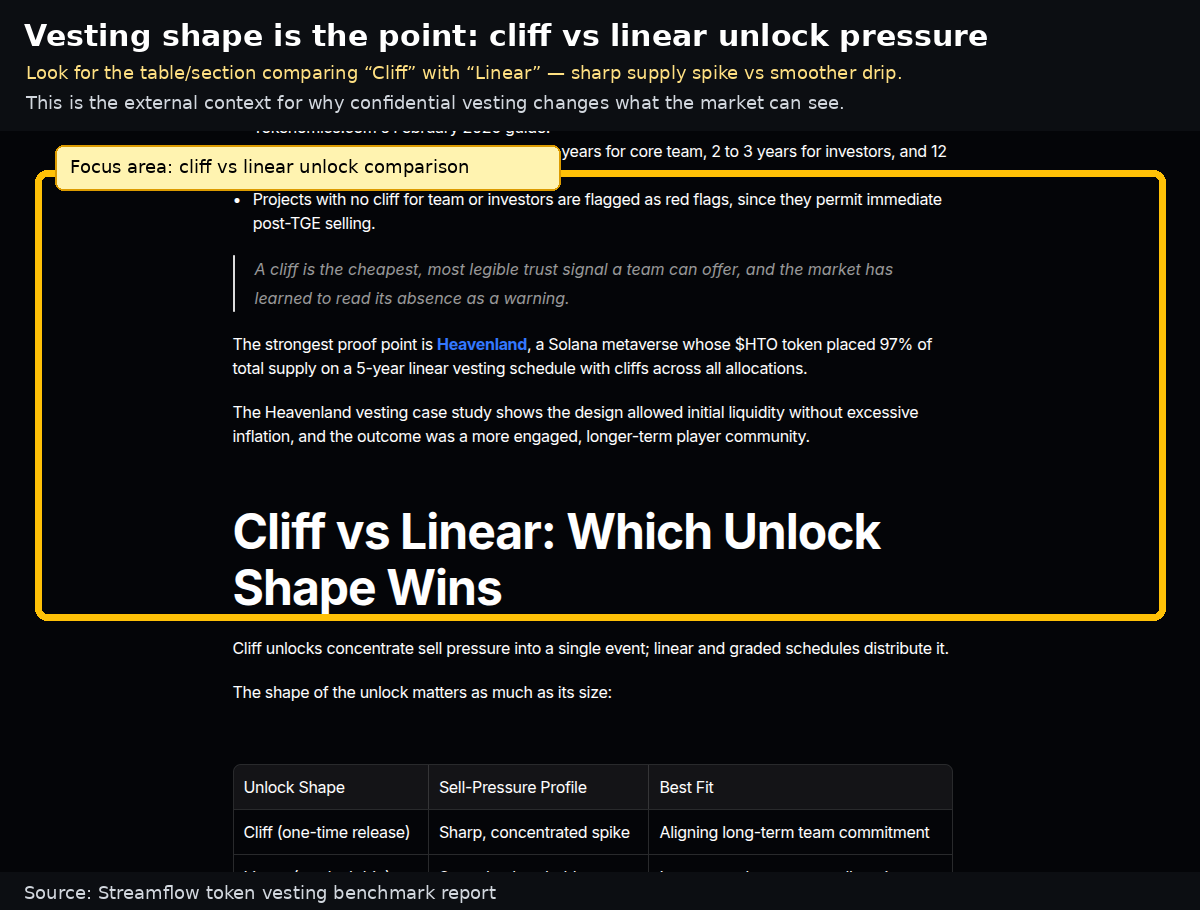
That is the useful tension: confidential vesting can protect sensitive treasury information and reduce copycat trading around known cliffs, but it also removes some of the public schedule traders use to price risk.
The interesting part is not just “privacy good” or “privacy bad.” It is what happens when a market that relies on visible unlock schedules starts hiding distribution details. If traders decide opacity creates a wider confidence shock, the market may demand a bigger risk discount instead. Are hidden unlocks a better design, or just a cleaner curtain?
Meme of the day

Follow @byte_and_block for bite-sized insights, or subscribe to the newsletter for deeper dives.
If this helped you cut through the noise, join hundreds of readers who get Byte & Block in their inbox every morning
Subscribe to our newsletter!