

 Telegram Bot
 ⟠ How to Stake ETH: A Practical Guide for Everyday Crypto Holders

By Byte & Block — exploring the building blocks of digital finance.
(For readers who already hold ETH and want their coins working for them.)
1. Why Stake ETH?
f you’re holding **Ethereum (ETH) anyway, staking is the crypto equivalent of earning interest. The network rewards you for helping secure it. When ETH sits idle, you might as well put it to work.
For example: if you stake 10 ETH at ~4% APY, you’d earn ~0.4 ETH/year — without selling your underlying coins.
Staking also helps the network: more staked ETH means more security and decentralization.
Three Ways to Stake ETH 🥩 🔥
You can pick how DIY you want to be — keypad and all the tech vs “click a button, done”.
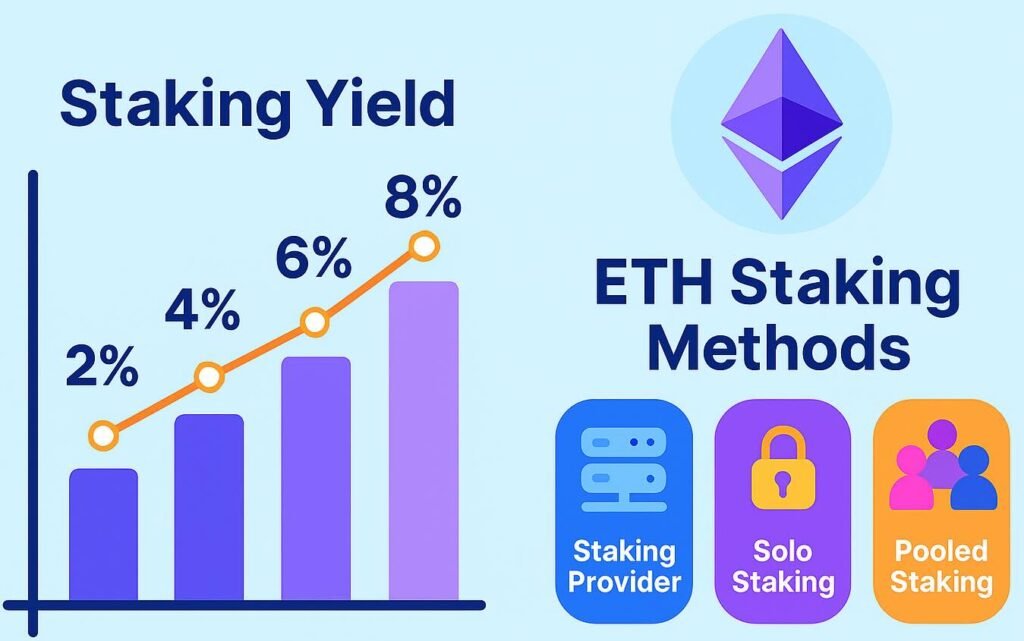
a) Centralized Exchange (CEX) Staking
b) Liquid Staking Providers (LSTs)
c) Running Your Own Validator
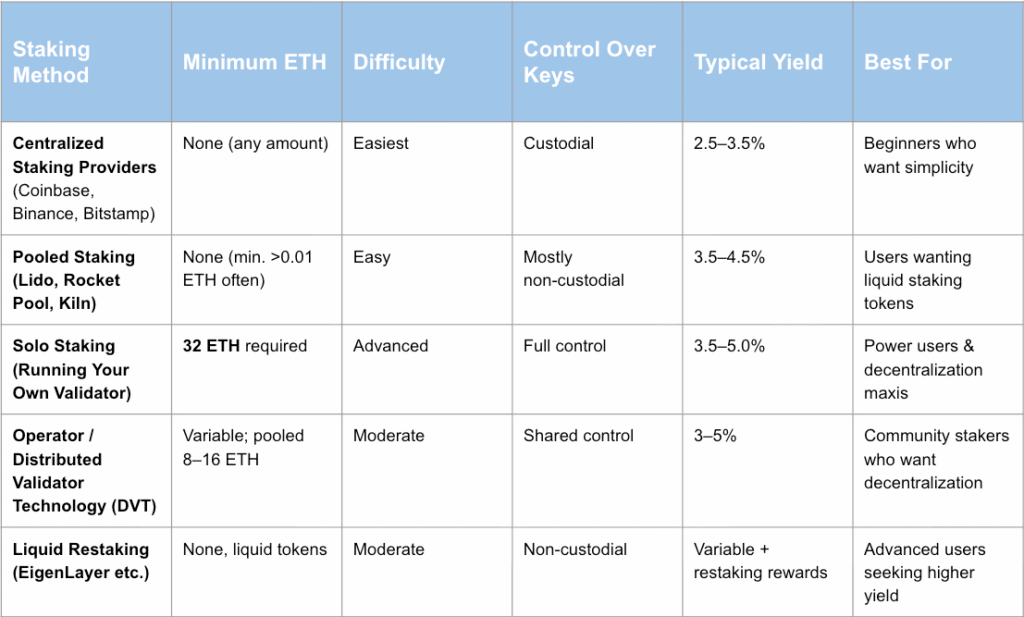
🌐 Top 3 Most Popular ETH Staking Apps (by adoption + liquidity)
These are the highest-usage platforms based on total staked ETH, liquidity, and number of users:
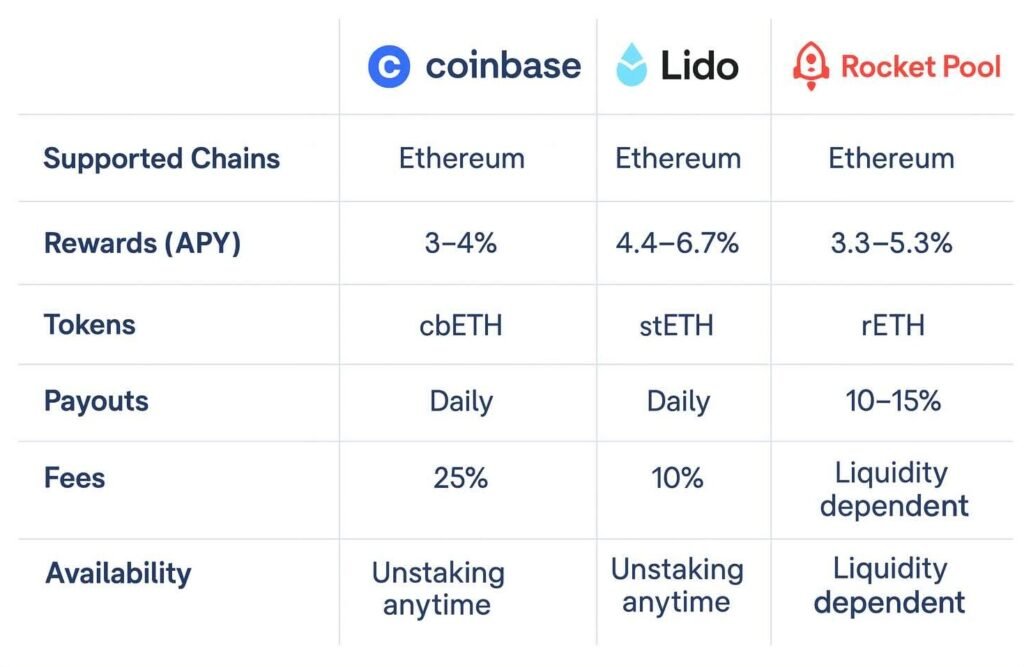
1️⃣ Lido Finance — The King of Liquid Staking
- Largest ETH staking protocol by far
- Offers stETH, usable across DeFi
- Non-custodial
- Best for: liquid yield + DeFi accessibility
2️⃣ Coinbase Staking
- Most popular centralized staking option
- Extremely easy onboarding
- Fully custodial
- Best for: beginners in the U.S. and EU
3️⃣ Rocket Pool
- Second-largest liquid staking protocol
- Non-custodial, decentralization-focused
- rETH is widely used
- Best for: users who want decentralization + ease
How to Stake ETH with a Popular Platform (Step-by-Step Example for Lido)
Here’s a walk-through of using Lido — one of the largest liquid staking providers.
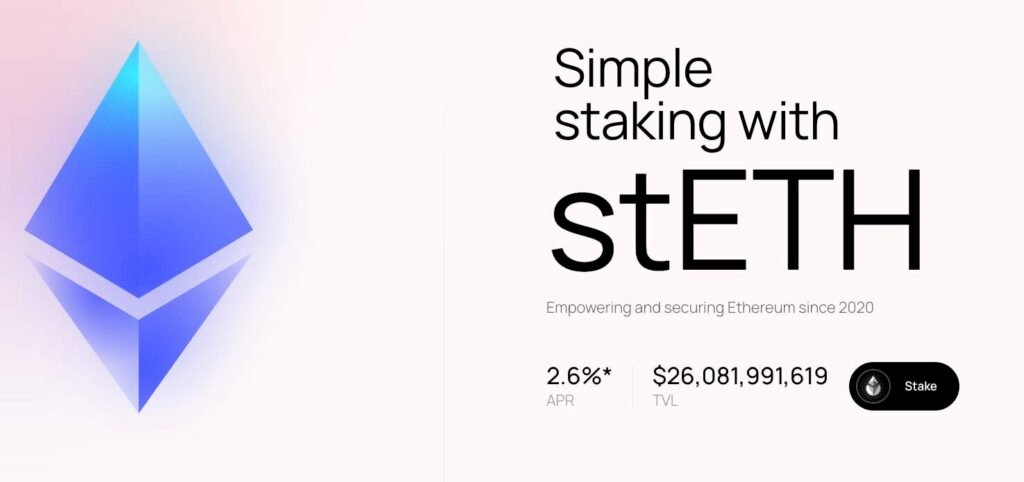
- Go to lido.fi→ click “Stake Now”.
- Connect your wallet (MetaMask, etc).
- Select how much ETH to stake. Review the expected yield (e.g., ~4% APY at time of writing).
- Approve the transaction (you’ll pay gas).
- Receive stETH token in your wallet — this token accrues rewards as your ETH is staked.
- Track your stETH balance and even (optionally) use it in other DeFi applications — e.g., lending or liquidity pools.
Bonus: When you unstake, you’ll convert stETH back to ETH (or a claimable withdrawal via the network) — check provider specifics.
⚠️ What to Watch Out For (Risks + Considerations)
DeFi tricks: Using stETH in other protocols adds extra layers of risk — proceed with caution.
Lock-in & liquidity: Some staking options require lock-up or delayed withdrawal.
Slashing risk: If your validator misbehaves or fails, a portion of your stake could be lost.
Platform/counterparty risk: With Lido or an exchange, you rely on that protocol’s security.
Rewards change: Yield changes over time — as more ETH gets staked, APY tends to drop.
Taxes: Staking rewards often count as taxable income; converting ETH to stETH may trigger a taxable event depending on jurisdiction.
Which Method Might Be Right for You?
- If you want simplicity and minimal setup → go with a centralized exchange.
- If you hold ETH long-term and want flexibility → liquid staking provider is likely best.
- If you’re tech-savvy and want maximum control → consider running your own validator.
Getting Started Checklist
 Periodically review whether the provider remains safe and high quality.
Ensure you own ETH (in your own wallet for best control).
Choose your staking path (CEX, Lido, self-validator).
Confirm yield, fees, lock-in conditions.
Consider setting aside at least a portion of your ETH for long-term staking.
Keep your private keys secure. Never share seed phrases.
Track your rewards, understand tax implications.
Final Word
Staking ETH isn’t magic money, but it’s a smart way to put coins you already own to use. For holders who plan to stay invested long-term, staking adds a layer of passive yield — helping your ETH work for you while you sleep. Just remember: choose your method wisely, check the risks, and stay in control.
☕️ Byte & Block out.
💬 What’s Next

Up next on Byte & Block:
- “How Smart Contracts Are Eating the Internet”
Follow @byte_and_block for bite-sized insights, or subscribe to the newsletter for deeper dives.
Subscribe to our newsletter!