
 Telegram Bot
 How Smart Contracts Are Eating 🤤 the Internet
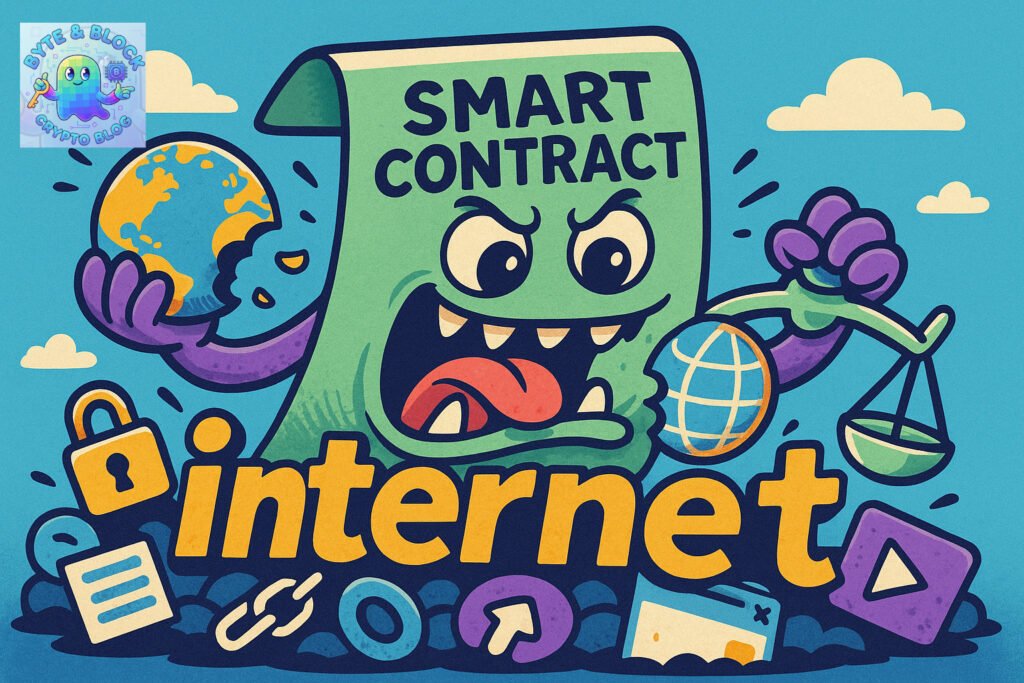
A Byte & Block deep dive into why programmable agreements are replacing platforms as the backbone of the modern web.
The internet is changing again—but this time, the shift isn’t happening in your browser. It’s happening underneath everything, in the hidden machinery that moves money, identity, ownership, and digital logic across the world.
And the engine behind that shift?
Smart contracts.
Not the buzzword you saw in 2017.
Not the speculative coin casino version.
The real thing—self-executing digital agreements that quietly replace middlemen, automate whole industries, and redraw how the internet handles trust.
This isn’t a “Web3 future” pitch.
It’s already happening, and the speed is accelerating.
Welcome to the era where smart contracts quietly eat the internet from the inside out.
The Trust Layer the Old Internet Never Had
The modern web is a masterpiece of content and communication—but a disaster for trust.
We rely on:
- platforms to enforce rules,
- banks to hold and move money,
- companies to secure our data,
- intermediaries to ensure people keep their promises.
Every time you send money, sign a contract, or rely on a service, you’re really trusting someone else’s database and someone else’s policies.
Smart contracts flip that model.
A smart contract doesn’t ask anyone to follow the rules. It enforces them by design.
Funds move automatically when conditions are met.
Royalties pay out instantly.
Trades settle without clerks or clearinghouses.
Marketplaces run without a central operator clipping fees.
This isn’t convenience—it’s structural transformation.
📑 What a Smart Contract Really Is (the human version)
Forget the technical jargon for a second.
A smart contract is basically:
A bot that executes agreements, transfers value, and enforces rules—perfectly, transparently, and without permission.
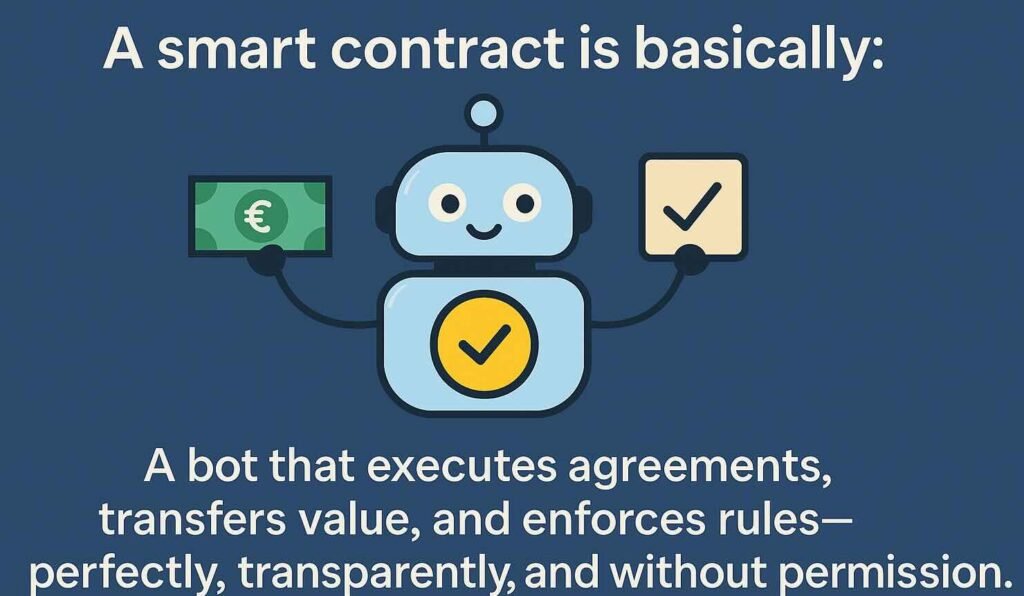
It’s software with teeth.
And once deployed, nobody—bank, corporation, government, admin—can arbitrarily change it.
That’s why the concept is so disruptive.
A smart contract is:
• a legal agreement without lawyers,
• a payment system without banks,
• a backend service without platform risk,
• a business model without the business.
And developers around the world are now treating smart contracts as trustless APIs—composable building blocks that anyone can plug into.
Smart Contracts as the 🌐 Internet’s New Backend
In Web2, every app has its own servers, databases, and private codebase.
In Web3, apps plug into public infrastructure—shared financial logic, shared identity rails, shared liquidity, shared data.
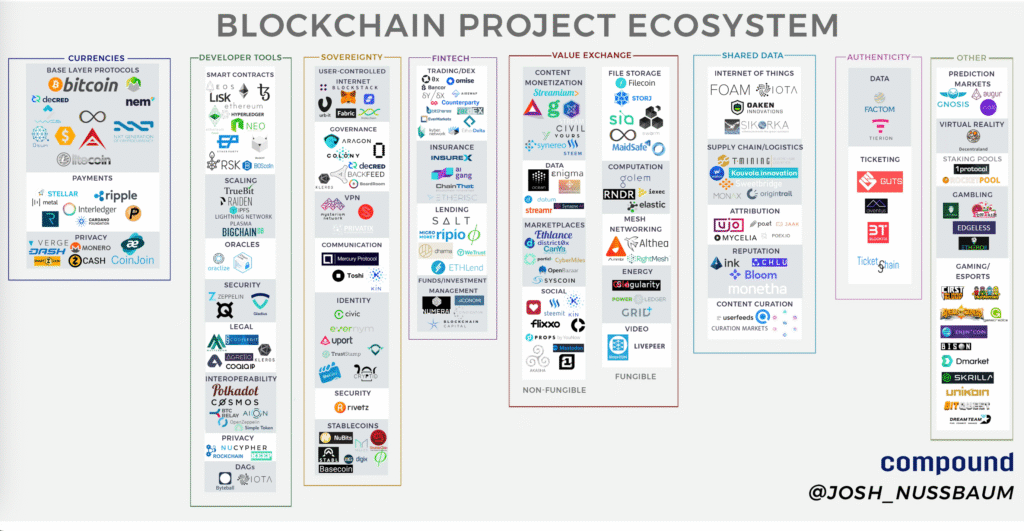
This is why smart contracts scale so fast. Developers don’t build from scratch. They compose:
• Use Uniswap smart contracts for swapping
• Use Maker or Aave for credit
• Use Base or Solana for high-throughput settlement
• Use ENS or smart wallets for identity
• Use Chainlink for off-chain truth
This is how the internet evolves—by replacing proprietary logic with open, programmable infrastructure.
📊 Finance Was the First Domino 🀛
DeFi wasn’t an accident. Finance is:
• rule-based
• predictable
• programmable
• math-heavy
• trust-sensitive
Exactly the kind of system smart contracts can operate better than humans.
Look at what’s already migrated on-chain:
• exchanges
• lending markets
• options vaults
• stablecoins
• bridges
• asset management
• automated market makers
• liquidity routing
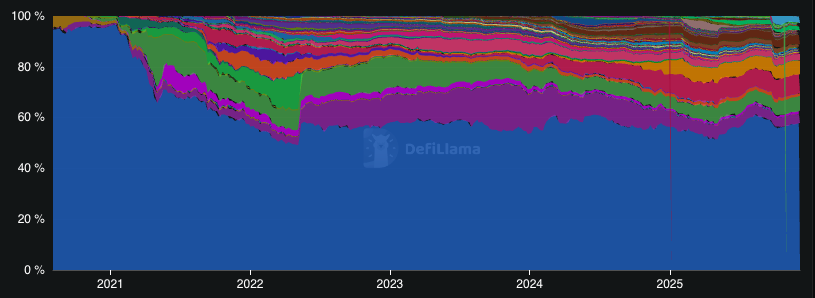
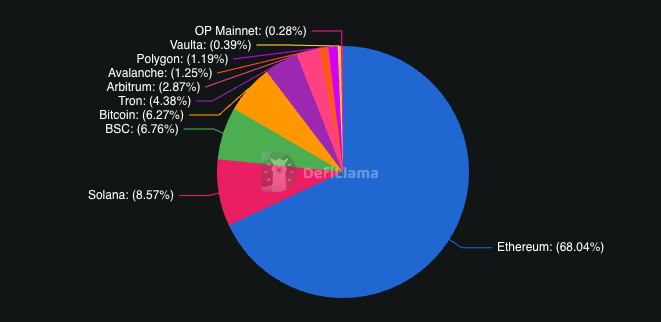
Billions of dollars settle every day without:
• a bank employee,
• a clearinghouse,
• a fintech platform,
• or a compliance department tapping “approve.”
This isn’t hype.
It’s already infrastructure.
Smart Contracts Are Quietly Rebuilding 🏗️ Everything Else Too
The narrative that smart contracts are “just money” is outdated.
Look at what’s happening behind the scenes:
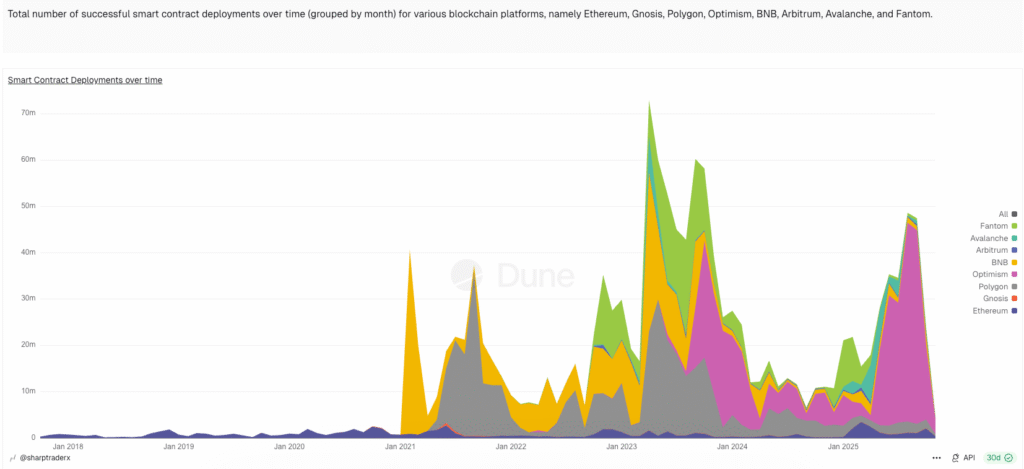
- Identity
• smart wallets
• passkeys tied to crypto accounts
• delegated permissions
• account abstraction
Identity is becoming programmable, not password-based. - Gaming
- In-game items become tradable, provable, ownable.
- Developers can’t rug your assets.
- Players don’t need permission to mod ecosystems.
- Media & IP
• automated royalty splits
• recurring payouts to creators
• transparent licensing
One contract can replace entire legal departments. - Supply Chain & Certifications
• authenticity proofs
• verifiable logistics
• automated compliance - Real-World Assets
Treasuries, bonds, carbon credits—tokenized and governed by smart contracts.
The Shift: Platforms 🔀 Protocols
Today’s internet runs on closed ecosystems:
• Google search
• Amazon commerce
• Meta social graph
• Stripe payments
• Visa settlement
• Apple identity
Smart contracts crack these empires open by removing the need for centralized permission.
Protocols don’t care:
• what country you live in,
• what bank you use,
• how big your company is,
• how much money you have.
They run the same for everyone.
When developers choose protocols over platforms, value escapes the corporate silo and becomes internet-native infrastructure.
Why They’ll Become Invisible 😶🌫️ (Just Like TCP/IP)
Nobody thinks about TCP/IP anymore, but it runs your entire digital life.
Smart contracts are following the same path.
Right now:
• you sign transactions
• you manage gas
• you switch networks
• you approve contracts
This is temporary friction.
Within three years:
• accounts → abstracted
• fees → subsidized
• chains → invisible
• transactions → bundled and automated
• onboarding → as simple as logging in
Users won’t know they’re interacting with contracts.
They’ll just… interact.
The contract layer becomes background infrastructure—quiet, reliable, omnipresent.
What Still Stands in the Way 🚧 (Honesty Section)
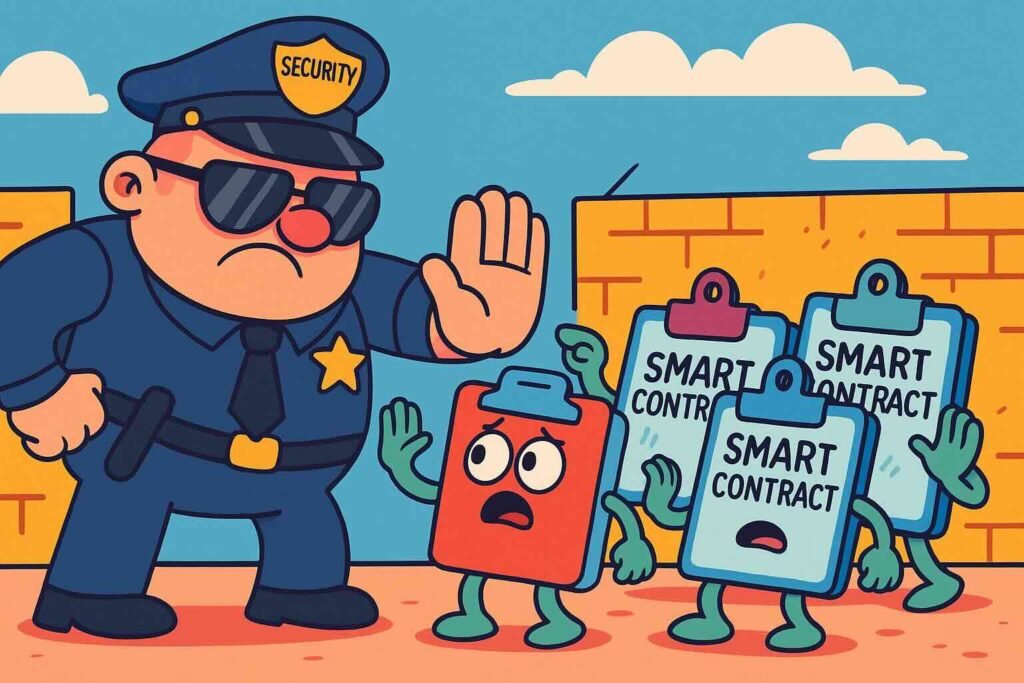
Smart contracts aren’t perfect.
Security
Bugs cost real money.
Governance
Code is neutral—humans are not.
Regulation
Governments still don’t know how to classify everything.
User Experience
Crypto UX still punishes normal humans.
But none of these barriers slow down developer adoption.
Just like early internet flaws didn’t stop the internet.
The underlying trend is too strong.
Why Smart Contracts Will Eat 😋🍽️ the Internet Anyway
Smart contracts win because they do what the old internet never could:
• settle value natively
• enforce rules automatically
• remove trusted middlemen
• scale without permission
• create open, composable ecosystems
• align incentives globally
• eliminate entire layers of corporate overhead
When infrastructure becomes programmable, predictable, and open, it eventually undercuts everything that isn’t.
It won’t happen in one explosive moment.
But year by year, industry by industry, API by API…
Smart contracts are quietly taking over.
And by the time the average person notices, the takeover will already be complete.
⸻
☕️ Byte & Block out.
💬 What’s Next

Up next on Byte & Block:
- “Crypto Infrastructure Is Quietly Winning Behind the Scenes”
Follow @byte_and_block for bite-sized insights, or subscribe to the newsletter for deeper dives.
Subscribe to our newsletter!