
 Telegram Bot
 🍪 Daily Byte – 18.12.2025

By Byte & Block — exploring the building blocks of digital finance.
Today’s Menu:
- Bitcoin volatility meets institutions
- Wall Street goes on-chain
- Corporate XRP exposure grows
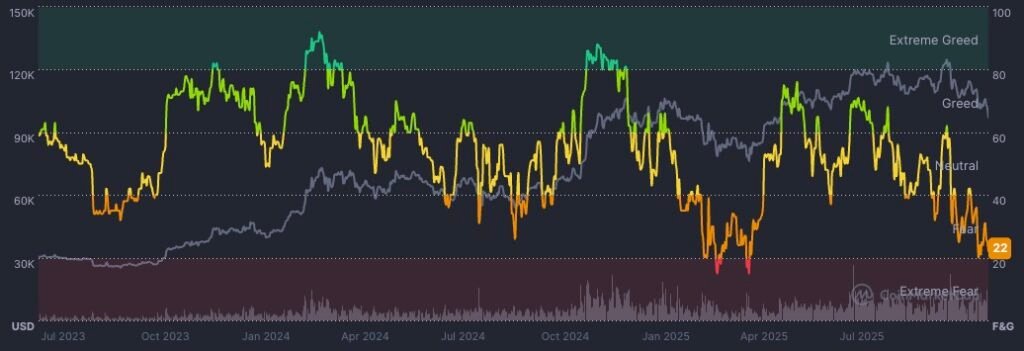
Fear & Greed Index Today

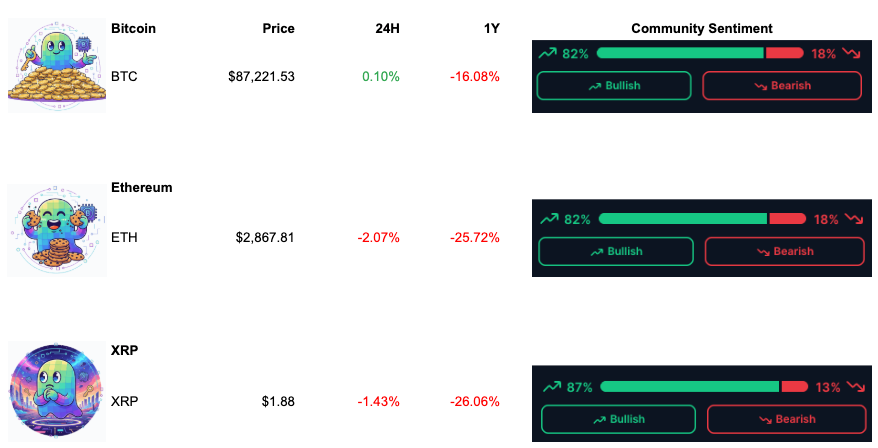
Prices as of 09:00 AM CET

Bitcoin Market Moves & ETF Flows
Bitcoin remains volatile and price action has been choppy.
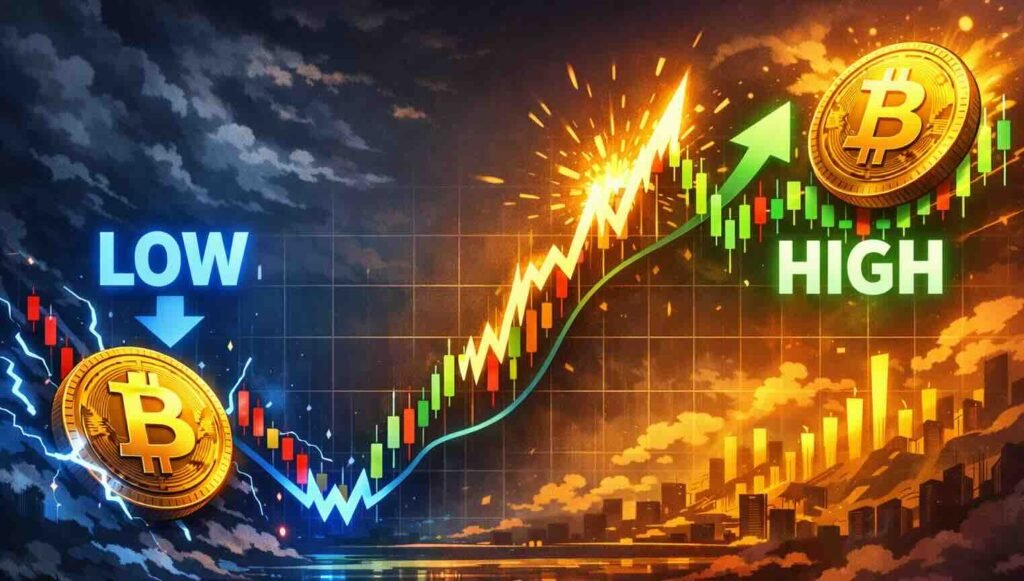
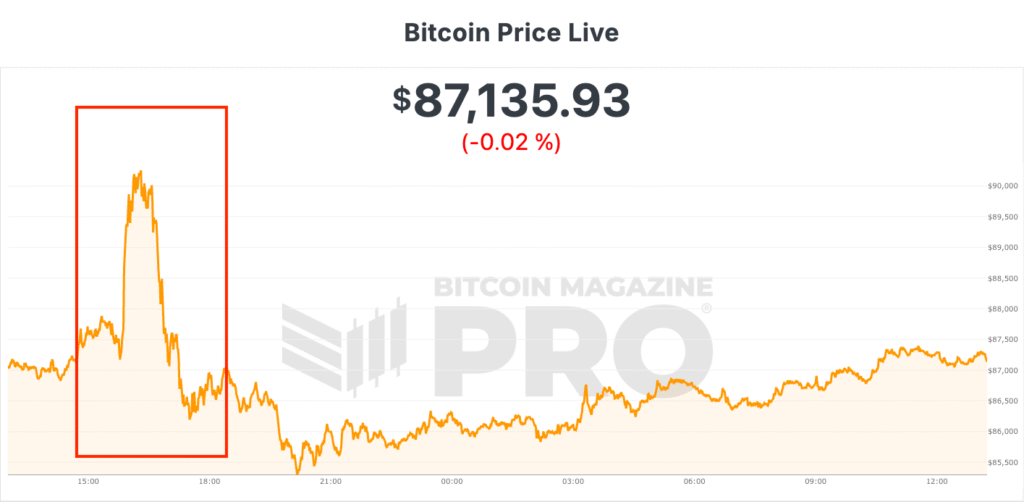
Bitcoin briefly rallied above $90,000 early in U.S. trading but swiftly retraced back below roughly $86,000, dropping to around $85,000 in just a few hours, underlining continuing market fragility. The rapid decline comes amid broader weakness and thin liquidity, reflecting persistent macro uncertainty and crypto-specific selling pressure. Traders have cited liquidations and risk-off positioning as contributing factors to the abrupt move lower.
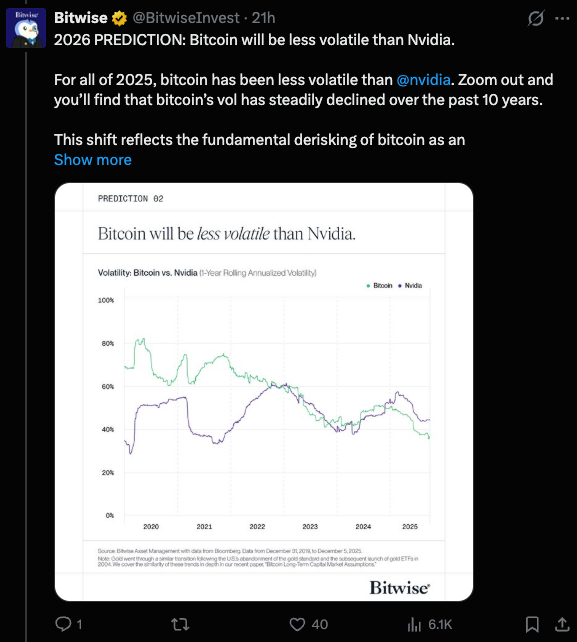
At the same time, Bitcoin’s overall volatility profile has reportedly shifted compared with traditional tech equities. Bitwise notes that Bitcoin’s price swings have become comparatively less extreme than those seen in high-growth tech stocks like Nvidia, a trend that it attributes to deeper and more diversified investor participation — partly driven by institutional products such as spot BTC ETFs.
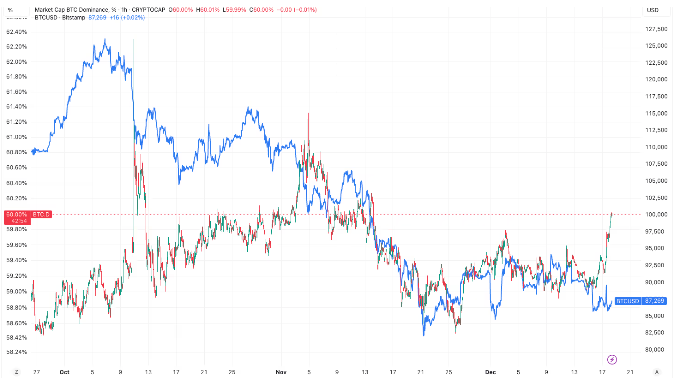
On the institutional front, U.S. Bitcoin ETFs are seeing renewed inflows, marking their strongest intake in over a month, with major products like Fidelity’s FBTC among those drawing capital. ETF flows into Bitcoin continue to exert influence on sentiment and buying pressure, pushing market dominance for Bitcoin relative to other crypto assets toward about 60%.
Despite these ETF inflows, traders are approaching a key U.S. inflation report (CPI) due imminently. Expectations of higher inflation — which historically affects the Federal Reserve’s interest rate path — are weighing on risk assets and BTC alike, as markets anticipate data showing year-over-year CPI increases that could delay or temper rate cuts. This macro backdrop is helping keep crypto markets subdued
The mixed signals — strong ETF demand but weak price follow-through — reflect a crypto market in a transition phase, where institutional participation provides structural support but broader investor conviction remains sensitive to macro catalysts. Traditional safe havens like gold have also gained, nearing record levels amid risk-off positioning, which suggests investors are seeking alternative hedges beyond digital assets. 
Bottom line: Bitcoin’s price is trading in a tight, choppy range, pressured by macro uncertainty and sentiment swings, even as institutional flows into ETFs show continued strategic interest. The looming inflation print is likely to be a key near-term driver for both crypto and broader risk markets.
JPMorgan’s Tokenized Dollars Rewiring Wall Street

While retail crypto debates memecoins and ETF flows, JPMorgan is doing something far more consequential: quietly rebuilding how money actually moves on Wall Street. Through its blockchain unit, Kinexys, the bank has been issuing tokenized U.S. dollars that allow institutional clients to settle payments instantly, around the clock, without relying on slow, legacy rails.
These aren’t public stablecoins and they’re not meant for speculation. JPMorgan’s tokenized dollars are backed directly by deposits held at the bank and run on permissioned blockchain infrastructure. Clients are already using them for repo settlements, cross-border transfers, and intraday liquidity management — the kind of plumbing that underpins global finance but rarely makes headlines.
The significance here isn’t branding, it’s intent. JPMorgan isn’t experimenting; it’s integrating blockchain into core treasury and payments operations. Settlement times drop from days to minutes, counterparty risk shrinks, and capital becomes more efficient. That’s not “crypto adoption” in the retail sense — it’s institutional inevitability.
What this shows is that tokenization is no longer a future concept. It’s being deployed quietly by the largest banks in the world, not to disrupt finance, but to upgrade it. By the time most investors notice, the rails will already have changed.
VivoPower’s XRP Positioning

VivoPower is making a bold crypto-adjacent bet. The company is reportedly in talks to acquire up to $300 million worth of Ripple shares, a move that would give it exposure to nearly $1 billion tied to XRP. If completed, it would mark one of the more aggressive corporate forays into the Ripple ecosystem to date — and a notable vote of confidence in XRP’s long-term role in global payments.
This isn’t a Bitcoin treasury play and it’s not a quick speculative punt. Ripple’s pitch has always centered on infrastructure: cross-border settlement, liquidity management, and tokenized value transfer for institutions. VivoPower’s interest suggests it sees XRP not just as a token, but as leverage on a broader shift toward blockchain-based financial rails.
The timing matters. Regulatory pressure around Ripple in the U.S. has eased compared to previous years, lowering one of the biggest barriers for corporate involvement. At the same time, tokenization and real-time settlement are becoming mainstream themes, not fringe experiments. That puts Ripple back in the conversation as TradFi inches on-chain.
For VivoPower, the deal would represent a sharp pivot — blending its existing business with exposure to a crypto network designed for institutional use. For the market, it’s another sign that corporate crypto exposure is diversifying beyond Bitcoin alone.
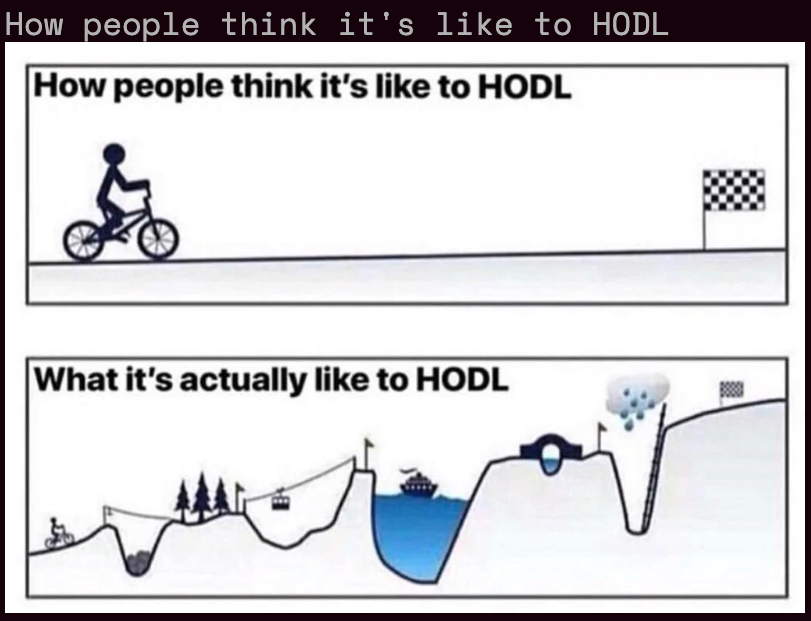
Meme of the day
Follow @byte_and_block for bite-sized insights, or subscribe to the newsletter for deeper dives.
If this helped you cut through the noise, join hundreds of readers who get Byte & Block in their inbox every morning
Subscribe to our newsletter!