
News Byte – 15.05.2026

By Byte & Block — exploring the building blocks of digital finance.
Today’s Menu
- Buterin tests Privacy Pools
- CLARITY lobbying war begins
- Bitcoin shallow-bear thesis tested


Buterin’s $113K Privacy Pools Stunt Is a Political Love Letter to Self-Custody
Vitalik Buterin just made the privacy debate harder to hand-wave away. He moved 50.25 ETH, worth about $113,000, through Privacy Pools, turning what could have been another abstract Ethereum privacy argument into an on-chain receipt.
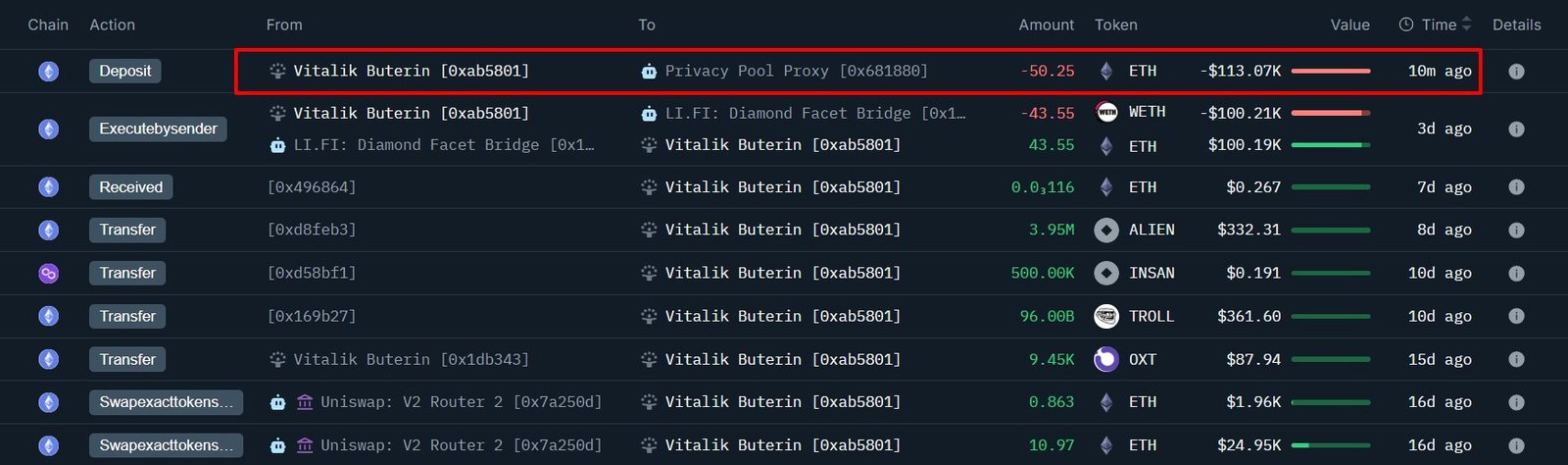
That matters because Privacy Pools is trying to solve the problem that has haunted crypto privacy since Tornado Cash: users want wallet privacy, regulators want dirty-money filters, and most products get crushed somewhere between those two demands. Privacy Pools’ answer is Association Sets, a design meant to let users prove they belong to a cleaner group of deposits without exposing the exact link between deposit and withdrawal.
That puts Privacy Pools in the same bigger bucket as blockchain itself: a system trying to prove what happened without making everyone trust the same middleman.
The useful signal here is simple: this was not a vague endorsement, and it was not a tiny test transfer. It was real ETH, tied to the most visible Ethereum founder, moving through a protocol built for the post-mixer enforcement era.
That on-chain receipt is why the story has teeth. Buterin has spent years saying privacy is normal, not suspicious by default. By pushing six figures through Privacy Pools himself, he is making the argument in the one language crypto actually respects: usage.
The risk is that “compliance-aware privacy” still has to satisfy two groups that rarely agree. If infrastructure providers and regulators buy the distinction, Privacy Pools becomes a serious self-custody upgrade. If they do not, this becomes a very public stress test for Ethereum’s privacy ambitions.

The CLARITY Act Just Escaped Committee — Now the Real Lobbying War Begins
The CLARITY Act finally cleared Senate Banking, but this is not the finish line. It is the moment the fight gets more expensive.

The committee advanced the Digital Asset Market Clarity Act in a 15-9 vote, with all Republicans joined by Democratic senators Ruben Gallego and Angela Alsobrooks. That gives crypto its cleanest U.S. market-structure opening in years: a bill with bipartisan momentum, a defined path toward the full Senate, and enough industry attention to turn every comma into a lobbying target.
The public victory lap was immediate because the headline is easy to understand. Committee passed it. Full Senate comes next.
That is why last week’s amendment knife fight still matters: the committee vote changed the venue, not the underlying fight over what kind of crypto rulebook Washington is willing to write.
But the clean headline hides the real story. The bill still has to survive floor politics, merge with the Agriculture Committee’s version, and hold together through fights over DeFi safe harbors, stablecoin rules, illicit-finance language, and ethics provisions. Democrats tried to push harder on those risk points in committee. Republicans framed the bill as a way to end regulatory gray zones and stop forcing crypto firms to build around enforcement threats.
So yes, this is a win for the industry. But it is also the opening bell for the next round. Exchanges, DeFi teams, stablecoin issuers, banks, and consumer-protection hawks now have a live vehicle to shape. The question is no longer whether a crypto rulebook can move. It is whose version gets attached before the Senate takes the real vote.

Glassnode’s “Shallowest Bear Ever” Thesis Hinges on $60K Holding — Here’s the History
Glassnode’s latest Bitcoin read is spicy because it sounds bullish and fragile at the same time. If $60,000 was the cycle low, this bear market may go down as the shallowest one Bitcoin has ever had.
The core metric is Relative Unrealized Loss, which measures unrealized investor losses as a share of Bitcoin’s market cap. During the February drawdown, that number jumped to about 25%. Painful, yes. But compared with prior bear-market bottoms, it was still nowhere near the kind of broad loss concentration that usually marks full capitulation. Since then, the metric has cooled to roughly 8% as BTC recovered toward the low $80,000s.
That fits the pattern behind the crashes that shaped Bitcoin: the network can survive brutal stress, but the market still needs a real reset before traders trust the next floor.
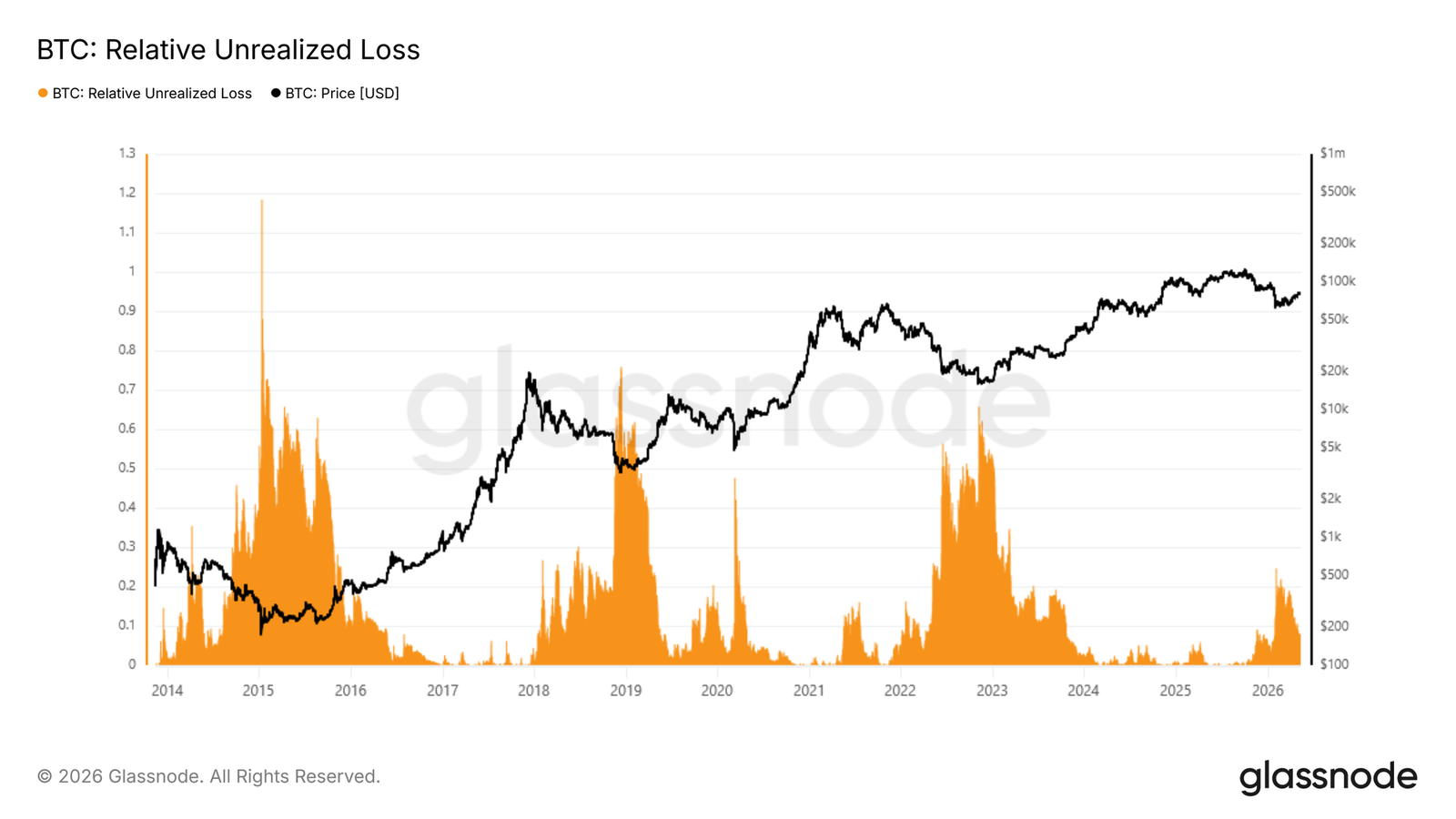
That is the weird part. The market registered fear, but maybe not the cleansing panic Bitcoin traders are used to seeing before a durable cycle floor. In other words, the shallow-bear thesis depends on the idea that this cycle bottomed with less damage because market structure, ETFs, and long-term holder behavior changed the drawdown profile.
There is a second datapoint supporting the recovery case: Bitcoin’s 30-day Realized Cap change has turned positive again, which means capital is flowing back into the network. But Glassnode’s caveat keeps this from becoming a victory lap. The inflow still sits below the conviction levels seen at stronger historical turning points.
No verified + relevant X post was recovered for this exact Glassnode shallow-bear/$60K angle, so this item leans on the chart and data instead of forcing an embed. The whole thesis is brutally simple: $60K holds, and the history books get weird. $60K breaks, and the shallow-bear story breaks with it.
Meme of the day

Follow @byte_and_block for bite-sized insights, or subscribe to the newsletter for deeper dives.
If this helped you cut through the noise, join hundreds of readers who get Byte & Block in their inbox every morning
Subscribe to our newsletter!