
News Byte – 13.05.2026

By Byte & Block — exploring the building blocks of digital finance.
Today’s Menu
- SharpLink’s Ethereum stress test
- The CLARITY Act amendment knife fight
- Poland’s crypto policy whiplash


SharpLink’s Ethereum Staking Bet Lost $686M — Is the Galaxy Deal a Lifeline or a Desperate Move?
SharpLink’s Ethereum strategy suddenly looks a lot less like a clean treasury play and a lot more like a stress test.
The company posted a Q1 net loss of nearly $686 million, with almost $507 million tied to unrealized losses from its Ethereum treasury. That is a brutal mark-to-market hit, especially compared with a net loss of less than $1 million in the same quarter last year.
But the story is not just “ETH went down, company lost money.” SharpLink also reported revenue above $12 million, up from less than $1 million a year ago, driven by its staked Ethereum treasury. So the operating pitch is still there: make the ETH productive, generate yield, and turn the balance sheet into something more active than a passive token vault.
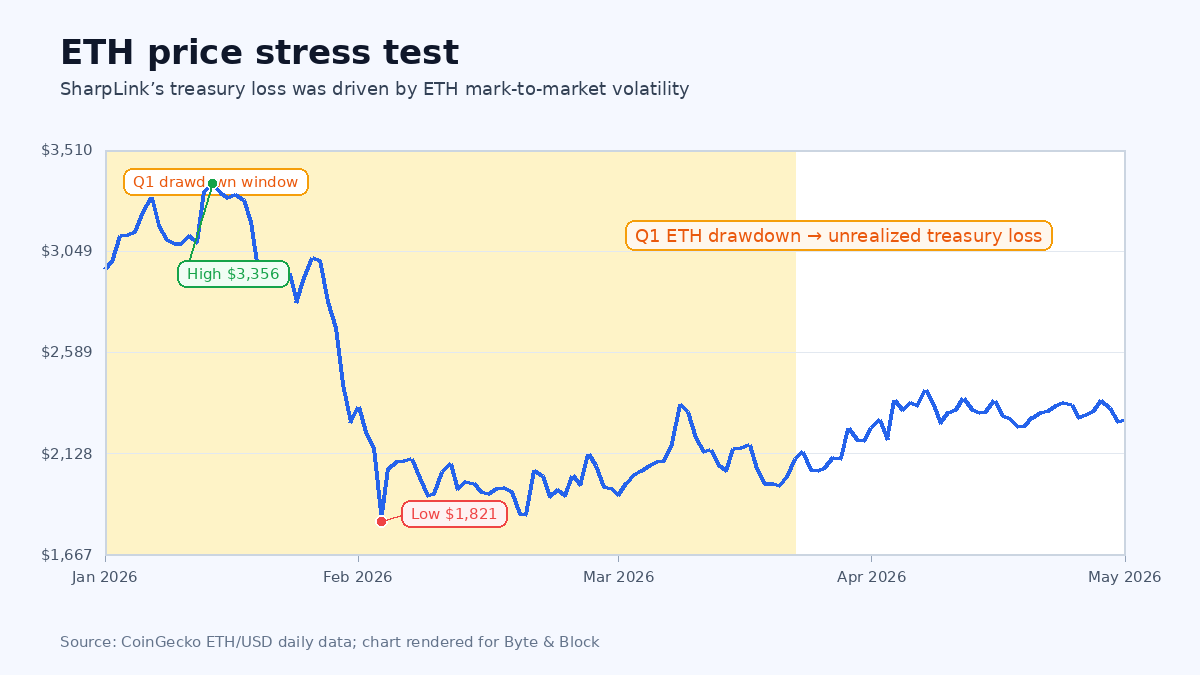
That is the tension. SharpLink is betting that staking revenue can make ETH productive, but a $507 million unrealized treasury hit is a loud reminder that yield does not cancel out price risk.
That is where the Galaxy deal comes in. SharpLink and Galaxy plan to launch a $125 million on-chain yield fund, with $100 million coming from SharpLink’s staked ETH treasury and $25 million from Galaxy. Galaxy would handle protocol selection, exposure sizing, and monitoring.
So the reader question is simple: is SharpLink building the MicroStrategy-style Ethereum treasury model before everyone else, or trying to outrun volatility by adding complexity? A staking treasury can produce income. But when unrealized losses dwarf revenue by that much, “productive ETH” still has to survive the price cycle.

The CLARITY Act Is Hemorrhaging Amendments — Here’s What’s at Risk for Crypto in Thursday’s Markup
The CLARITY Act is supposed to bring crypto closer to rules of the road. Instead, it is walking into Thursday’s Senate Banking markup covered in political fingerprints.
Committee members filed more than 100 amendments ahead of the vote, turning the bill into a live fight over stablecoin rewards, Fed access for crypto firms, legal-tender use cases, tax payments, AML treatment, and how much room the industry should get before securities law kicks in.
Elizabeth Warren alone reportedly filed more than 40 amendments. One would stop the Federal Reserve from issuing master accounts to crypto companies. Another would prohibit crypto from being used as legal tender, including for tax payments. That cuts directly against the industry’s long-term push to move crypto beyond trading and into payments, settlement, and public-sector use.
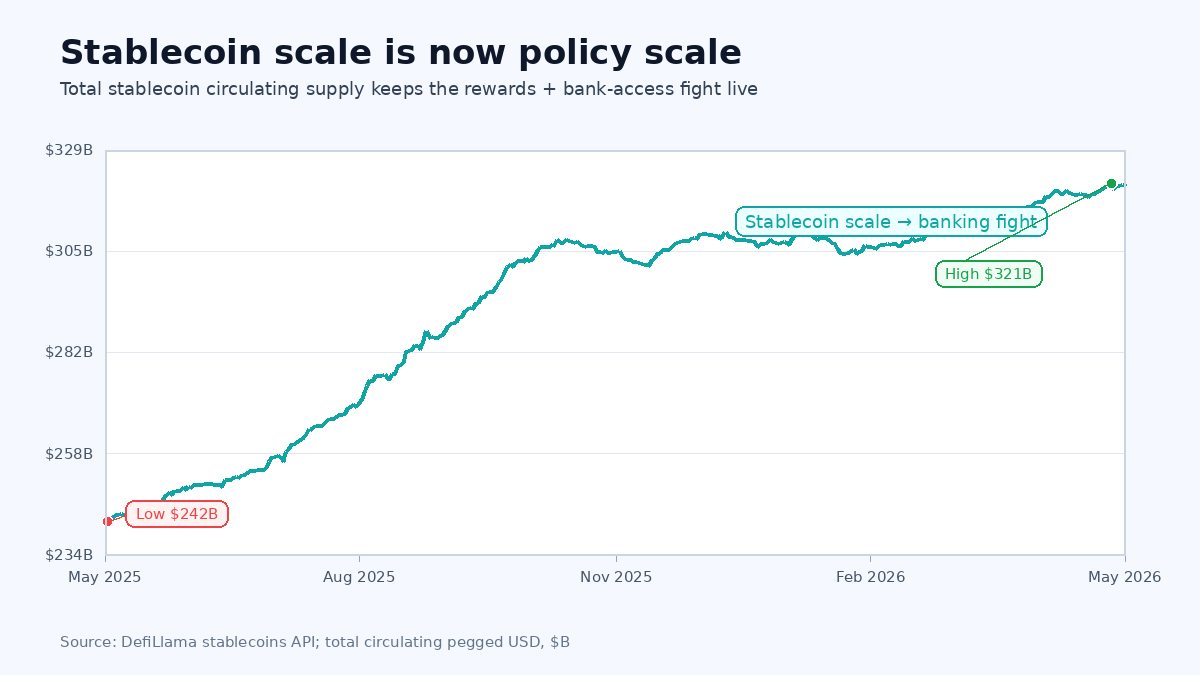
That is why the Fed-access fight matters. The bill is not just about token definitions; it is about the banking wrapper crypto can live with when stablecoins, brokers, and exchanges start looking more like financial infrastructure.
The stablecoin piece is especially messy. The Senate text would ban rewards on idle stablecoin balances that look like deposit interest, while allowing transaction-linked rewards. Banks want that tightened further. Crypto firms want room to compete. Regulators would be left to draw the line later.
Thursday’s markup is less about whether Washington likes crypto and more about what kind of crypto it is willing to let exist inside the financial system. Clear rules would help. But 100-plus amendments tell us the “clarity” phase is still very much a knife fight.

Poland’s PiS Party Flip-Flops From Regulation to Total Crypto Ban Mid-Debate
Poland’s crypto debate just took a hard turn from “how do we regulate this?” to “what if we ban the whole thing?”
The Sejm opened debate on four competing crypto bills this week after lawmakers failed to overturn President Karol Nawrocki’s veto of earlier sector legislation. That alone would be enough policy drama. But then Law and Justice, the former governing party, withdrew its own crypto-market bill after four MPs pulled support and submitted a new proposal seeking a total ban on digital asset-related activity in Poland.
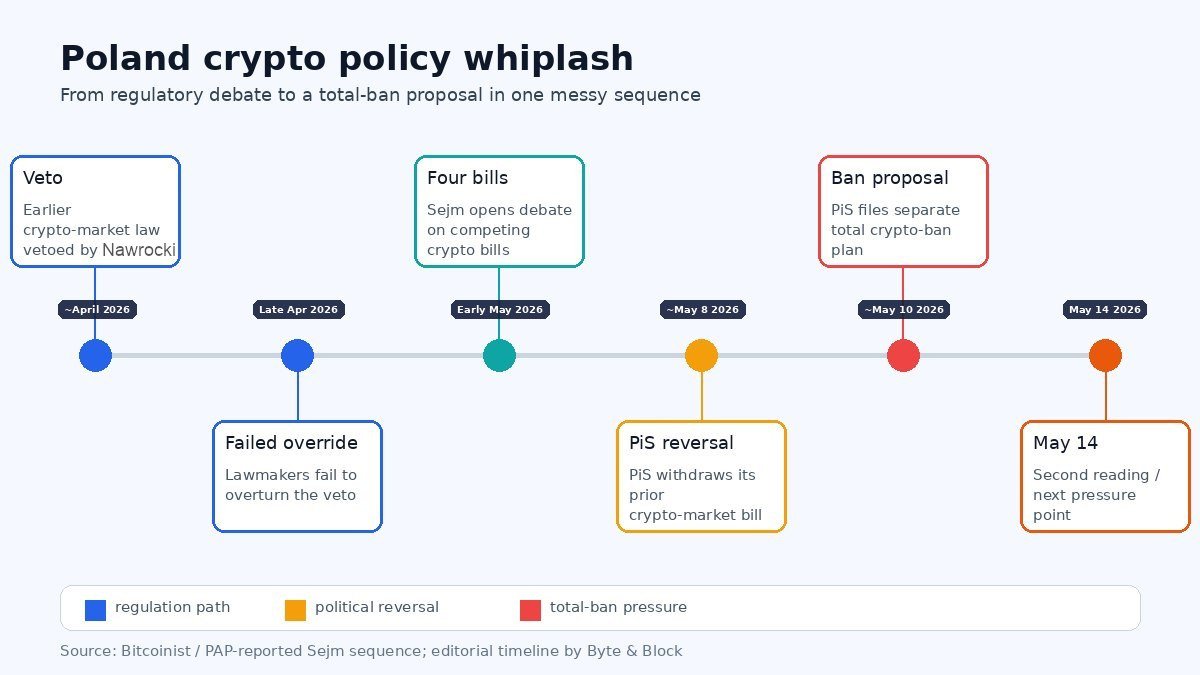
That flip is the real story. PiS is politically aligned with Nawrocki, who previously vetoed crypto legislation on the argument that the government’s framework risked overregulation and abuse. Now the same political camp has a faction pushing an outright ban.
The numbers are not small either. The government draft reportedly proposes penalties up to PLN 25 million, or about $6.9 million, for obstructing inspections. The president’s version sets that ceiling at PLN 20 million, or about $4.5 million. So even the “regulatory” versions are not light-touch.
Poland shows the darker version of the same policy question: markets want regulatory clarity, institutional adoption, and structural integration, but political whiplash can turn that into freeze powers, fines, or even outright ban talk.
There is also a political scandal layer. Prime Minister Donald Tusk has accused crypto firm Zondacrypto of being backed by Russian money and sponsoring lawmakers who opposed digital asset regulation. Zondacrypto and Nawrocki’s camp dispute the framing, but the controversy is now part of the legislative atmosphere.
This is what makes Poland worth watching. It is not just another EU implementation story. It is a live example of how crypto regulation can become a proxy fight over sovereignty, scandal, party politics, and whether “consumer protection” becomes the polite wrapper for market exclusion.
Meme of the day

Follow @byte_and_block for bite-sized insights, or subscribe to the newsletter for deeper dives.
If this helped you cut through the noise, join hundreds of readers who get Byte & Block in their inbox every morning
Subscribe to our newsletter!