
🍪 Daily Byte – 26.12.2025

By Byte & Block — exploring the building blocks of digital finance.
Today’s Menu:
- Bitcoin’s support gap makes $89K fragile
- Russia quietly builds a crypto pipeline
- CME overtakes Binance in derivatives
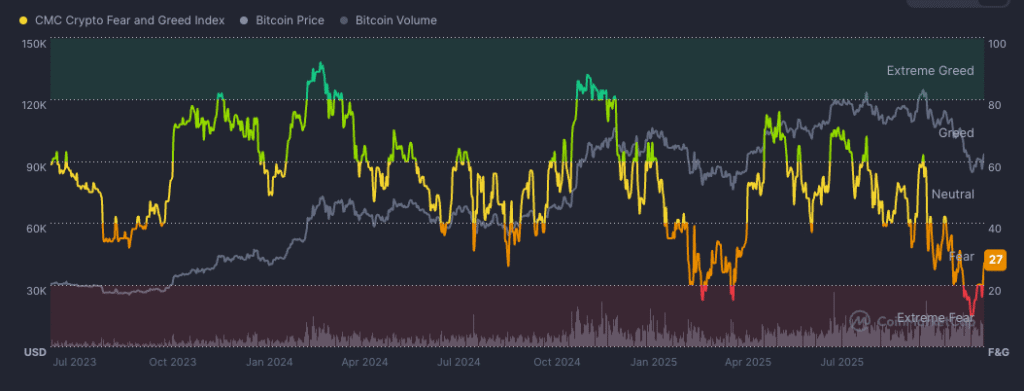
Fear & Greed Index Today

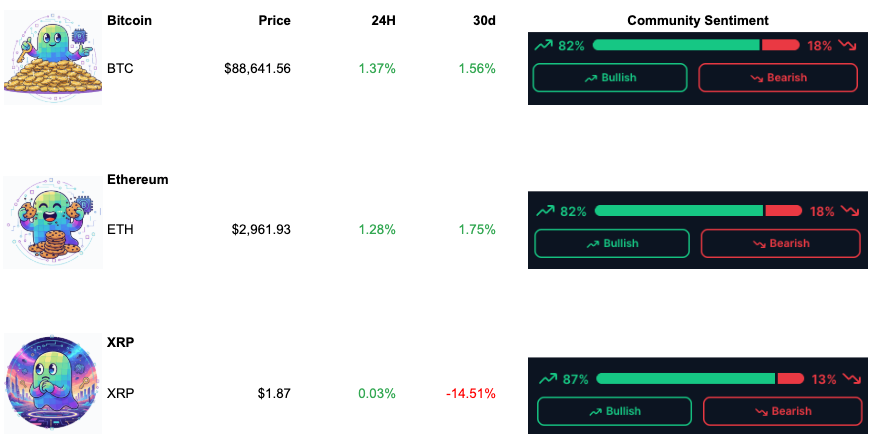
Prices as of 09:00 AM CET

Bitcoin’s “Support Gap” Problem Is Back — And It’s Not Just a Chart Nerd Issue
Bitcoin is holding around $89K, but the market mood is giving strong “smile through the pain” energy.

Because underneath the current price is an uncomfortable truth: the $70K–$80K zone is a historical support dead zone — a stretch where Bitcoin didn’t spend much time trading during its last major expansion. And markets hate empty space.
When price has lots of historical trading activity at a certain level, it creates “sticky support” — lots of past buyers who will defend it. But when price rips through a zone quickly, there aren’t many bag-holders waiting there. If BTC slides back into that range, it can fall through it like a ghost through drywall.
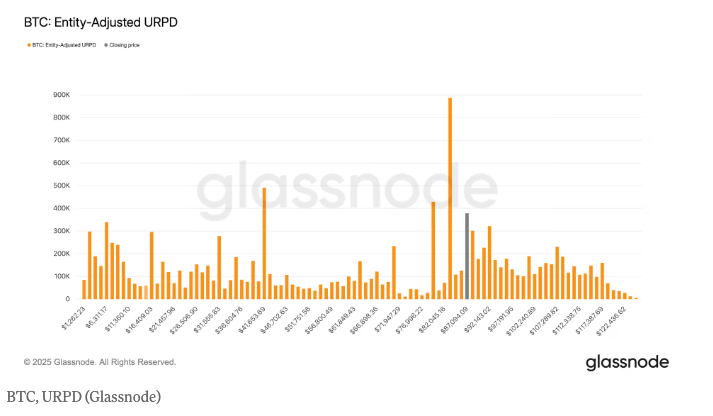
That’s exactly why this $70K–$80K band is being talked about again: it’s less a “floor” and more a trapdoor with poor lighting.
Meanwhile, sentiment isn’t helping. The Fear & Greed Index is sitting around 27 (Fear) — which sounds bearish until you realize it’s not panic fear. It’s more like “everyone’s annoyed and quietly sweating” fear. The kind that makes selling feel rational… and makes “low sweeps” possible.
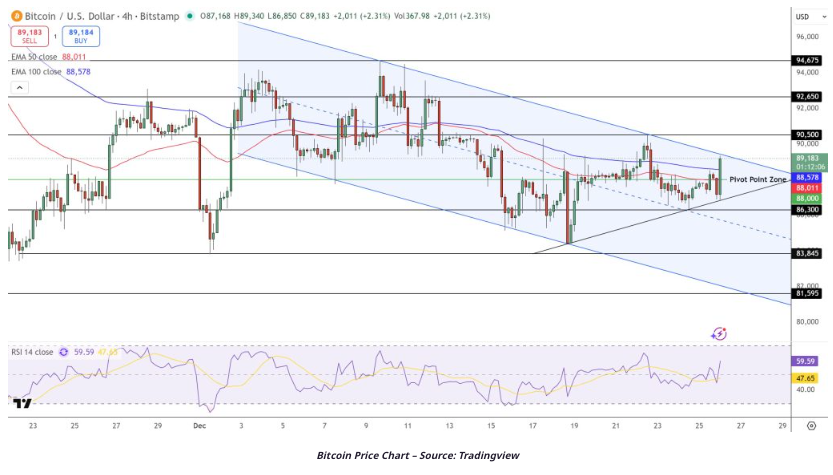
On the bullish side, BTC hasn’t broken yet. It’s still holding the current structure, and the $94.6K level remains the big psychological gate — the one that flips people from “this is a correction” back to “we’re so back.”
Byte & Block’s takeaway?
Bitcoin isn’t collapsing — but it is sitting above a support gap like someone balancing on a chair… over lava. If price slips, the next bounce zone isn’t guaranteed to catch it quickly.
Russia Wants Bitcoin… and Apparently a Nuclear Power Plant to Mine It

If your “Bitcoin adoption storyline” still involves Silicon Valley, ETFs, and hoodie bros… Russia just walked in and flipped the table.
This week’s headlines read like a geopolitical fever dream: Russia and the U.S. reportedly discussed Bitcoin mining at the Zaporizhzhia nuclear power plant, on the sidelines of Ukraine-related talks.
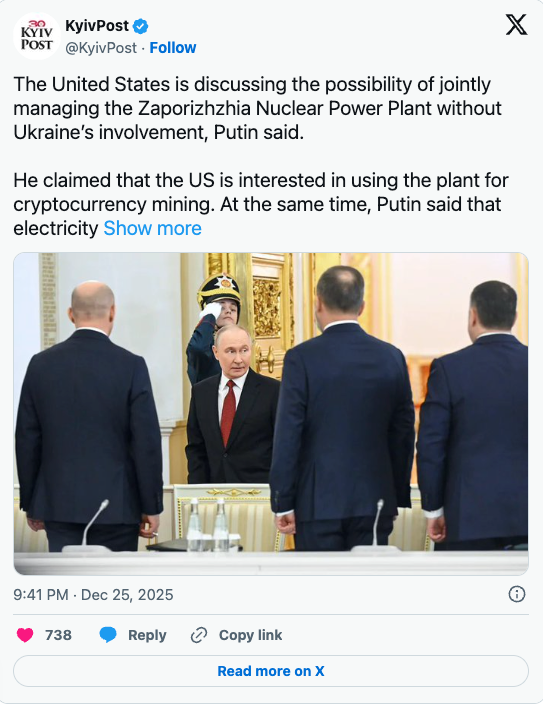
Yes — that Zaporizhzhia. Europe’s largest nuclear plant. Currently occupied territory. And now apparently being floated as a potential energy source for industrial-scale Bitcoin mining discussions.
Why would anyone even bring this up?
Because Bitcoin mining is basically energy arbitrage dressed as finance, and nuclear power is one of the cheapest, most constant forms of energy on earth. If you control a stable energy source… you control an economic weapon.
And Russia’s broader move is clear: it’s slowly building a pipeline where Bitcoin becomes less “speculative asset” and more sanctions-resistant infrastructure.
That’s supported by the other story: Russia’s largest banks are now openly exploring crypto financial products — including crypto-collateral lending, meaning borrowers could post crypto and get fiat loans. That’s not “underground crypto.” That’s institutional plumbing.
Put together, it signals something important:
Russia isn’t trying to “ban or embrace crypto.” It’s trying to weaponize access to it.
Mining + bank products + legal access frameworks = a system where Bitcoin is treated like strategic capital.
Byte & Block’s takeaway:
This isn’t a meme trade. Russia is positioning Bitcoin the way nations position oil: an energy-linked asset that can move value when the traditional system says “no.”
CME Passing Binance Is the “Adults Are Here” Moment for Crypto Derivatives

Crypto derivatives just hit a milestone that should matter more than another memecoin listing:
CME is overtaking Binance as the dominant force in crypto derivatives — meaning the biggest momentum in leverage markets is shifting from retail casino energy to regulated institutional rails.
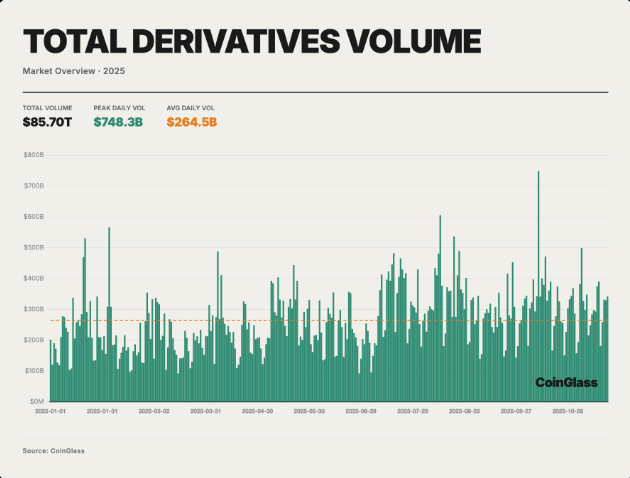
This isn’t just a “market share” story. It’s a power shift.
When CME (the Chicago Mercantile Exchange) leads, it usually means:
✅ hedge funds
✅ asset managers
✅ regulated strategies
✅ basis trades
✅ big money using leverage for structured exposure, not just vibes
Meanwhile, Binance dominance was built on global retail flow — fast, liquid, and highly speculative.
So what happens when CME becomes the center of gravity?
The market becomes less impulsive, more structured, and more sensitive to traditional finance dynamics (rates, funding spreads, macro risk positioning). In other words: crypto starts behaving more like a serious financial asset class… whether we like it or not.
Byte & Block takeaway:
When CME wins the derivatives war, it’s a sign crypto is no longer purely a retail-driven market. The leverage is moving into suits — and suits don’t trade like degens.
Meme of the day

Follow @byte_and_block for bite-sized insights, or subscribe to the newsletter for deeper dives.
If this helped you cut through the noise, join hundreds of readers who get Byte & Block in their inbox every morning
Subscribe to our newsletter!