🍪 Daily Byte – 12.12.2025

By Byte & Block — exploring the building blocks of digital finance.
Today’s Menu:
- Bitcoin After Hours Moves
- Altcoin Season Still Waiting
- Solana Breakpoint Takeaways
Fear & Greed Index Today

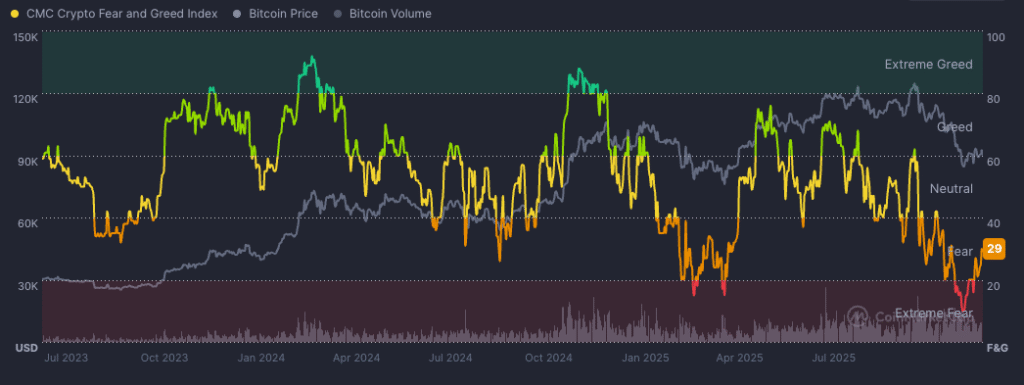
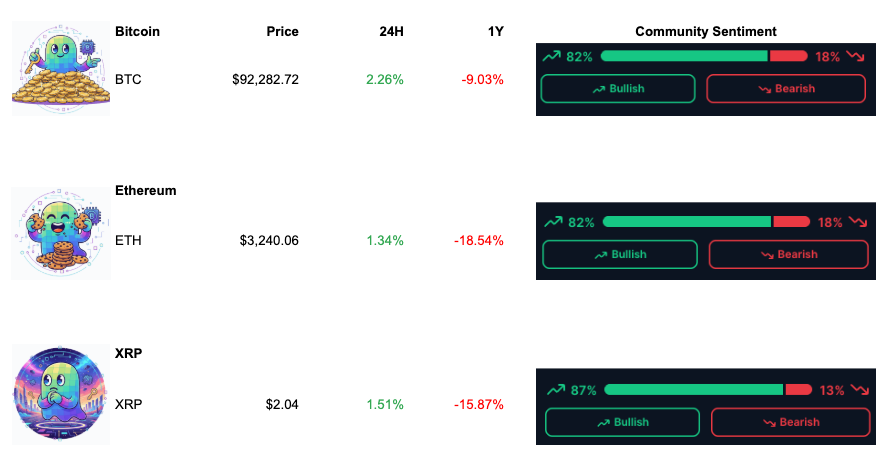
Prices as of 09:00 AM CET

₿ Bitcoin After Dark — Who Really Moves BTC Price

Bitcoin has a strange habit that most traders barely notice: it tends to do its best work when U.S. markets are asleep.
Earlier this week, an ETF filing tied to Tidal Trust II surfaced via SEC Form N-1A. The proposed product is designed to hold Bitcoin only outside U.S. equity trading hours, effectively buying BTC after the U.S. market closes and exiting exposure when it reopens. In short: an ETF built entirely around Bitcoin’s “overnight” performance.
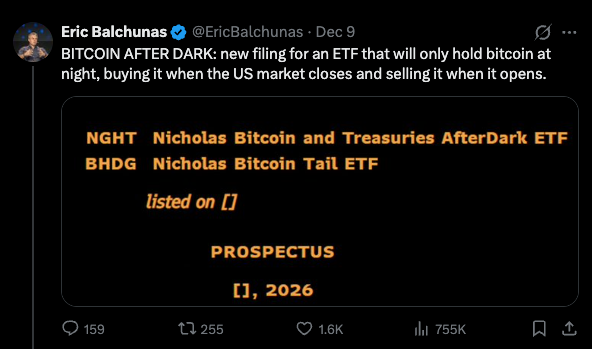
The filing matters because it formalizes something traders and analysts have quietly noted for years: a disproportionate share of Bitcoin’s long-term gains occur when U.S. markets are closed. Asia and Europe sessions, weekends, and overnight hours have historically contributed more to BTC’s cumulative returns than the New York trading window.
This directly challenges the dominant narrative that U.S. spot ETFs, Wall Street flows, and U.S. macro data are the primary drivers of Bitcoin’s directional trend. ETFs clearly influence short-term volatility, especially during U.S. hours. But the ETF filing itself implicitly acknowledges a different reality: the strongest marginal buyer may not be operating on Wall Street’s clock at all.
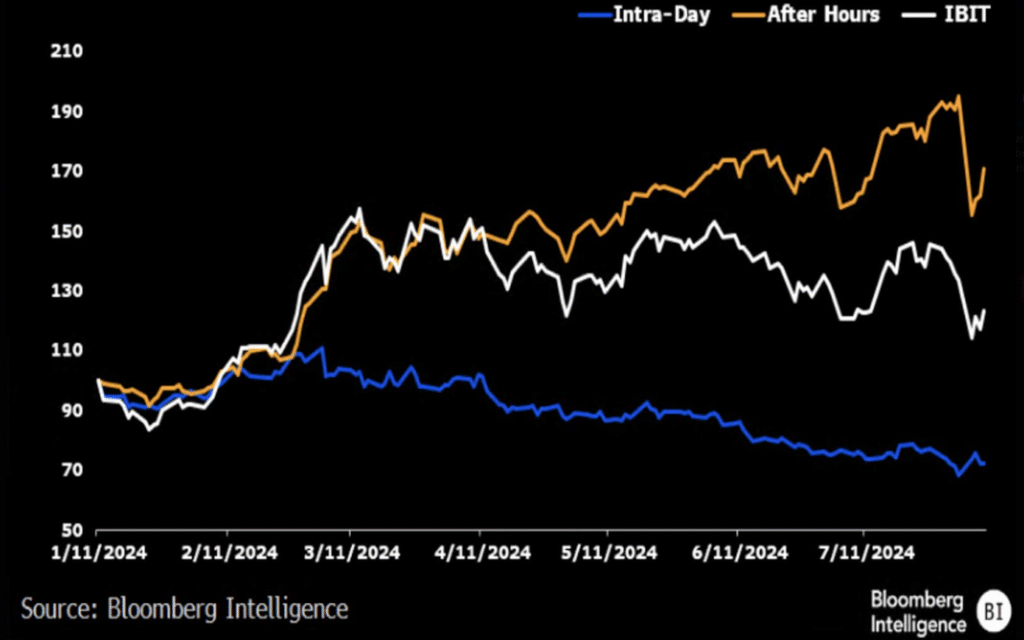
The timing is notable. U.S. spot Bitcoin ETF flows have cooled, demand during U.S. hours has softened, and yet Bitcoin continues to defend key levels. That divergence — weaker ETF momentum paired with resilient overnight price action — is exactly what this filing attempts to monetize.
Importantly, this ETF is not live, approved, or guaranteed to launch. It is a conceptual product, but a revealing one. ETF issuers don’t design strategies around coincidences. They design them around repeatable behavior backed by data.
Byte & Block takeaway:
If Bitcoin’s most consistent gains happen “after dark,” then U.S. ETFs may explain how BTC trades — but not who ultimately moves it. This filing doesn’t prove the thesis, but it legitimizes the question. And sometimes, that’s where the real story begins.
Solana Breakpoint: Fewer Fireworks, One Real Signal
Solana Breakpoint 2025 didn’t feel like a victory lap — and that’s exactly why it mattered.

If you walked into Abu Dhabi expecting a parade of moon-shot announcements, you probably left underwhelmed. No surprise protocol overhaul. No sudden “Solana fixes everything” moment. Instead, the conference delivered something quieter — and arguably more important: distribution.
The standout development wasn’t a Solana-native launch at all. It was Coinbase announcing expanded on-chain trading support for Solana tokens, effectively putting Solana assets in front of tens of millions of users through familiar rails. No new wallet onboarding saga. No new UX leap required. Just access.
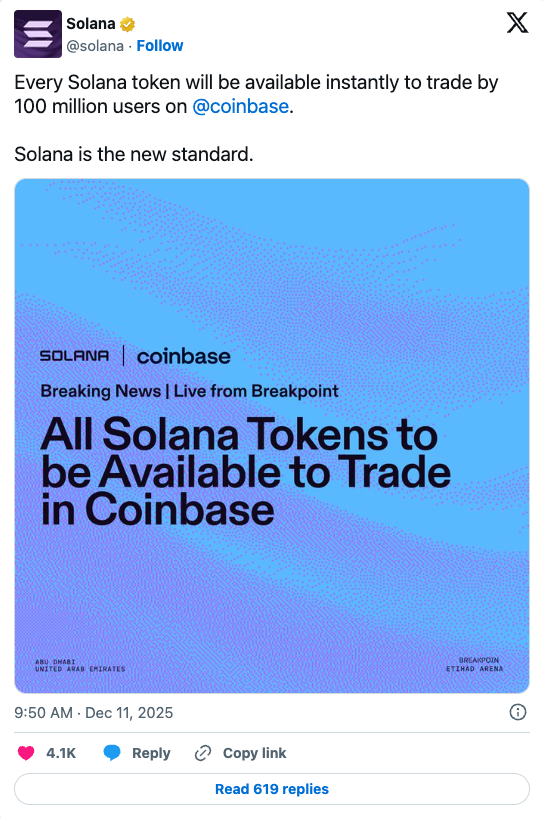
That’s a different kind of progress.
Breakpoint’s broader tone reflected that shift. Less hype, more plumbing. Fewer promises about “the next billion users,” more conversations about how existing users actually move assets, trade, and interact with apps. Solana’s leadership leaned into maturity rather than momentum.
Market reaction mirrored the vibe. SOL didn’t rip. It didn’t collapse either. Price chopped around macro noise while attention stayed fixed on Bitcoin, rates, and liquidity — a reminder that conferences no longer act as automatic catalysts. The market wants flows, not stages.
And yet, the Coinbase move quietly answered a question Solana has wrestled with for years: distribution beats narratives. You don’t need everyone to talk about your ecosystem if they’re already using it by default.
Byte & Block takeaway:
Breakpoint didn’t crown a new story for Solana — it removed the need for one. In this phase of the cycle, access matters more than applause.
Altcoin Season Keeps Knocking — But Nobody’s Opening the Door Yet
Altcoin season is crypto’s favorite “almost.”
It’s always just around the corner. And right now? It’s pacing outside, checking its phone, pretending it’s not being ignored.
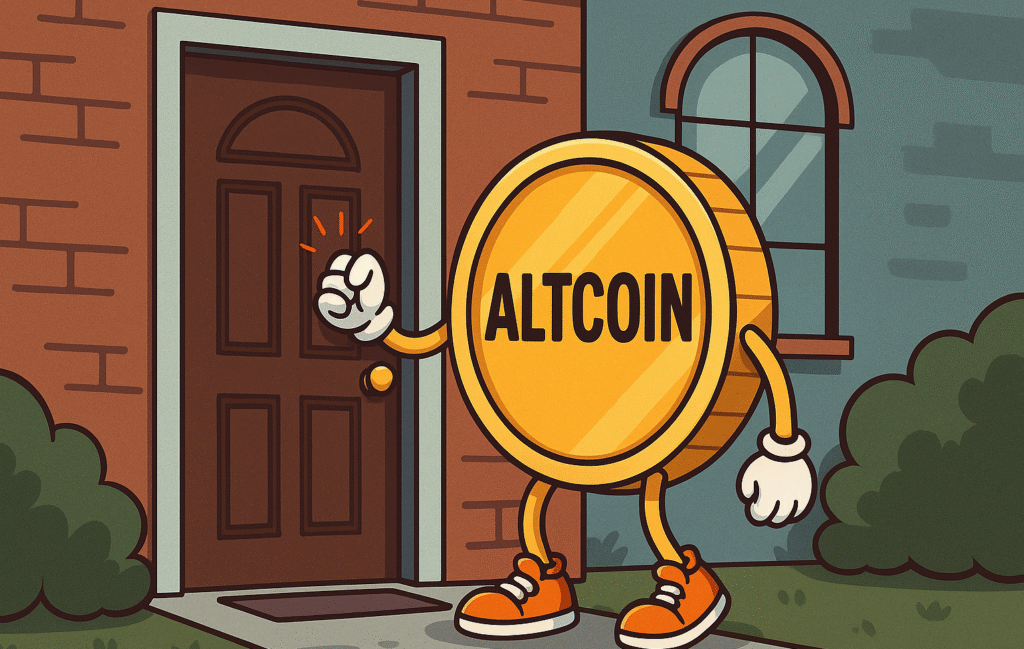
Over the past couple of weeks, the usual signs have started flickering back on. Bitcoin has been range-bound near major levels. Dominance has stopped screaming higher. A handful of large alts have shown sudden bursts of life. The kind of moves that make traders squint and ask: “Is this it?”
Not quite.
The broader picture still says hesitation. Bitcoin dominance hasn’t meaningfully broken down.
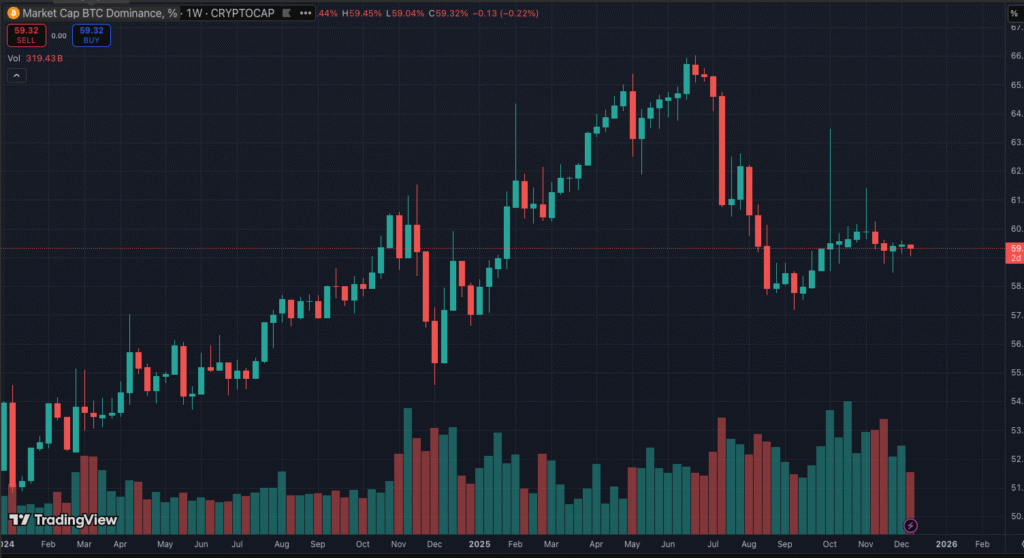
Most altcoins are moving — but not together. Strength is isolated, rotations are fast, and conviction is thin. The Altcoin Season Index remains stuck in neutral territory.
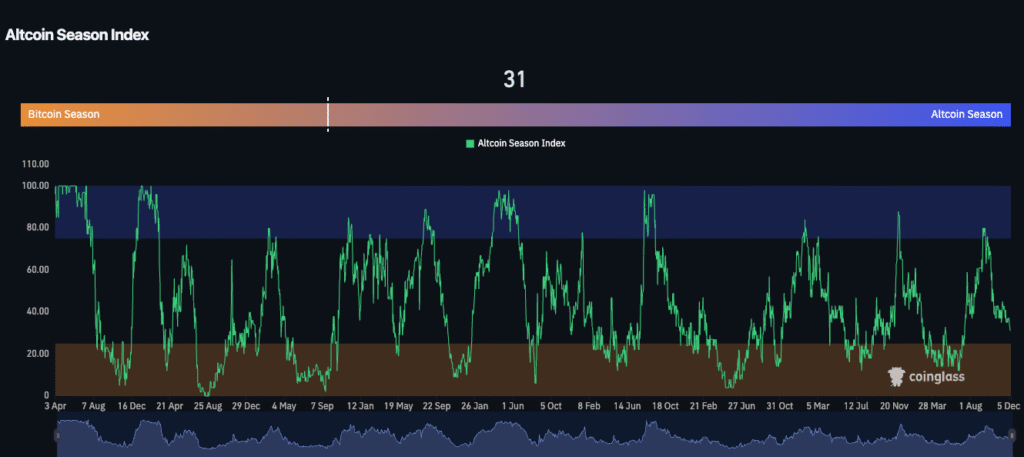
That’s the key difference from classic alt seasons. When they arrive, you don’t need to ask. Capital floods outward. Breadth explodes. Everything starts outperforming BTC at the same time. What we’re seeing now is more like altcoin curiosity, not commitment.
And that makes sense. Liquidity is still selective. Traders are cautious. Institutions aren’t spraying capital across the long tail — they’re picking their spots. Until that changes, altcoin rallies will keep looking like short sprints instead of marathons.
Still, the market is clearly watching. Every BTC pause, every dominance wobble, every ETH bounce reopens the conversation.
Byte & Block takeaway:
Altcoin season isn’t cancelled — it’s delayed. And until capital moves broadly, not just briefly, the whispers stay whispers.
Meme of the day
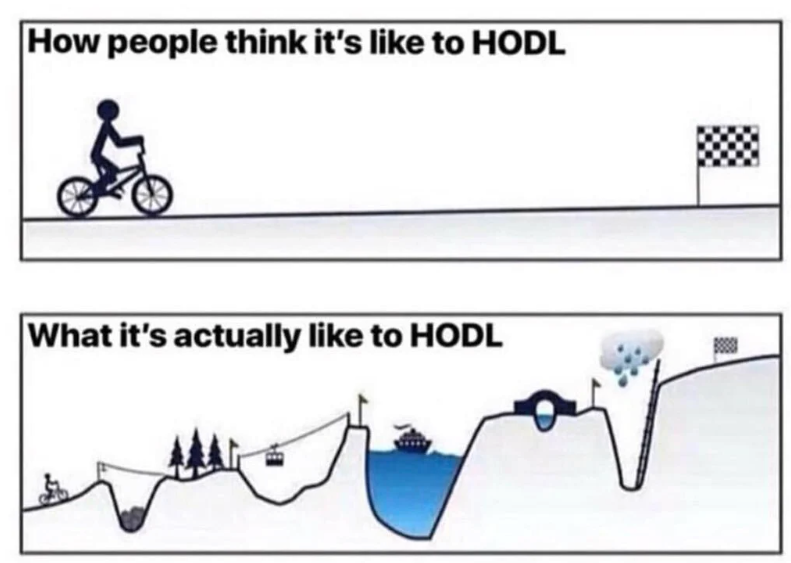
Follow @byte_and_block for bite-sized insights, or subscribe to the newsletter for deeper dives.
If this helped you cut through the noise, join hundreds of readers who get Byte & Block in their inbox every morning
Subscribe to our newsletter!