

 Telegram Bot
 🍪 Daily Byte – 26.11.2025

By Byte & Block — exploring the building blocks of digital finance.
Today’s Menu:
- Bitcoin’s Bottom Is Forming Quietly
- Texas buys BTC
- Polymarket cleared by CFTC
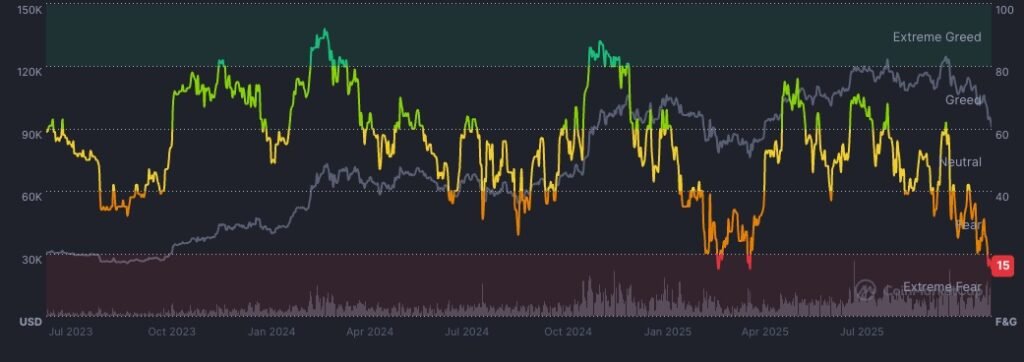
Fear & Greed Index Today

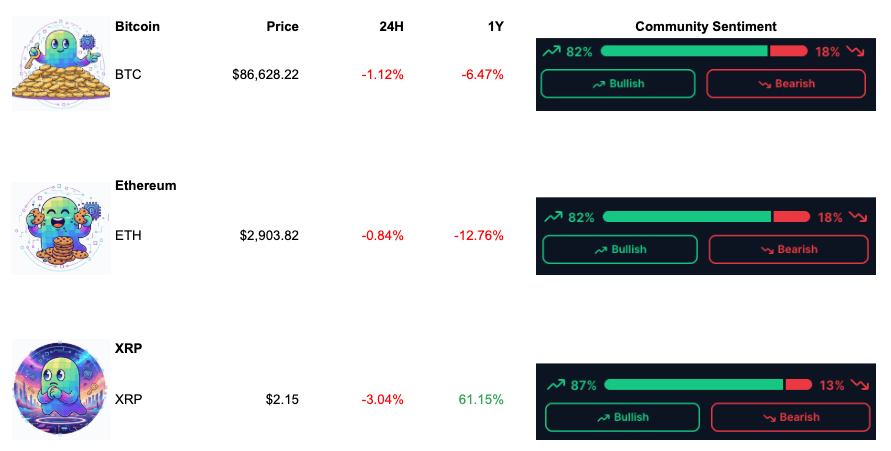
Prices as of 09:00 AM CET

₿ Bitcoin’s Bottom (‿∣‿) Is Whispering Before It Shouts
Bitcoin just survived one of the sharpest sentiment collapses since the FTX shock — price sliced below $90K, fear spiked, and “Is this the top?” started trending again.
But when you zoom out past the panic candles, the macro data is telling a very different story.
Here’s the key message:
Price is falling, but Bitcoin’s underlying liquidity is quietly improving — a divergence that has historically marked early-bottom construction, not a cycle top.
Let’s break it down.
1️⃣ Seller Exhaustion + Oversold Extremes = Bottom Conditions Forming
Across spot and derivatives, the analytics show exhausted sellers and a deeply oversold VWAP.
Extreme readings like this rarely persist and often signal the late stages of forced selling.
Bottoms aren’t clean or elegant.
They look like this:
sharp wicks, rejected levels, fear everywhere.
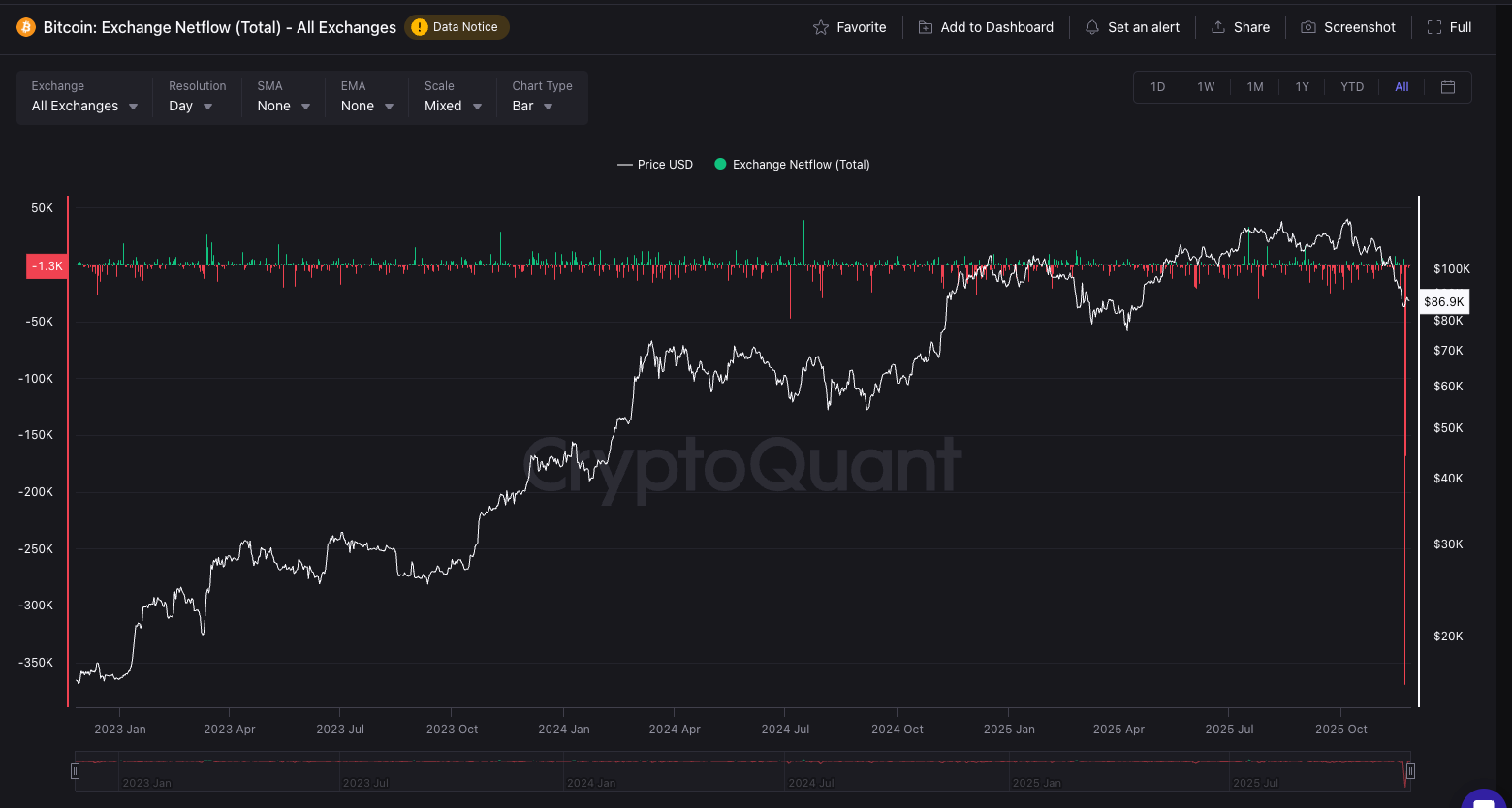
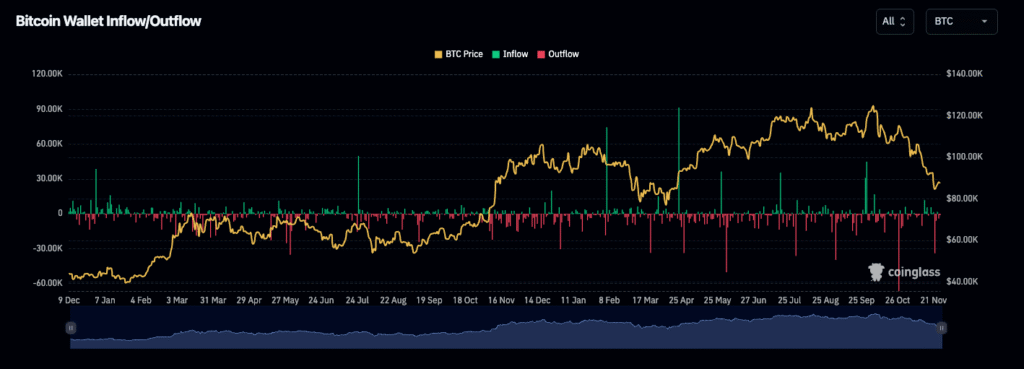
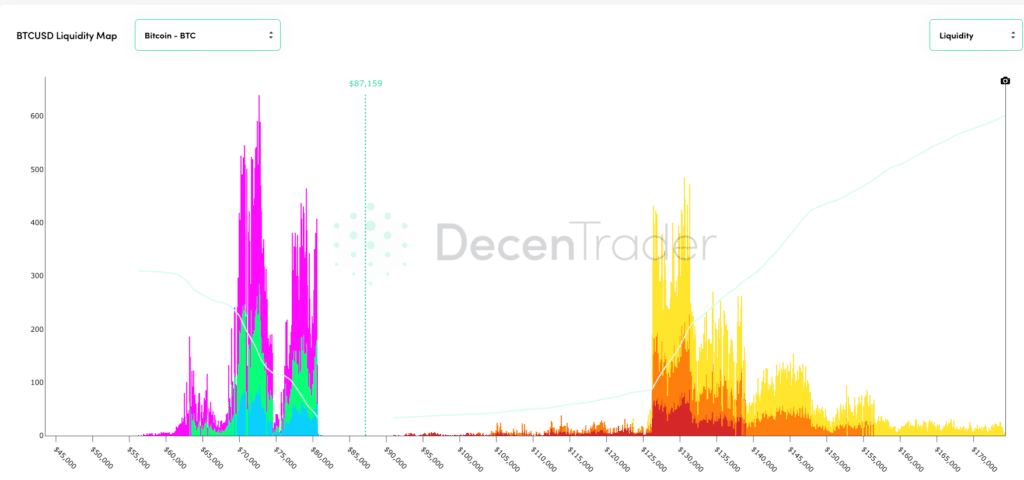
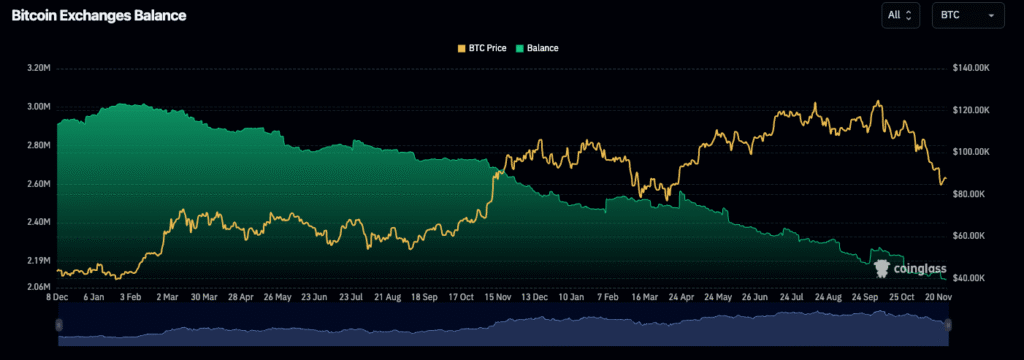
And that’s exactly what we’re seeing. CryptoQuant’s latest dashboard also shows a noticeable uptick in exchange outflows, hinting that despite the volatility, some longer-horizon holders are gradually moving coins off trading venues rather than adding sell pressure.”
Also supported by Coinglass
2️⃣ The $80K Rejection Was Violent — and Instructive
Bitcoin’s slam below $90K and quick rejection of the $80K floor mirrors patterns seen during previous cycle-defining shakeouts:
• heavy downside pressure
• short-lived capitulation
• liquidity immediately stabilizing afterward
The last time we saw a similar combination of
selling pressure + bearish structure + extreme fear
was the FTX collapse — which printed the macro bottom weeks later.
History rhymes, even if it doesn’t repeat perfectly.
3️⃣ Liquidity Is Rising While Price Falls (the most important signal)
This is the part people miss while staring at red charts.
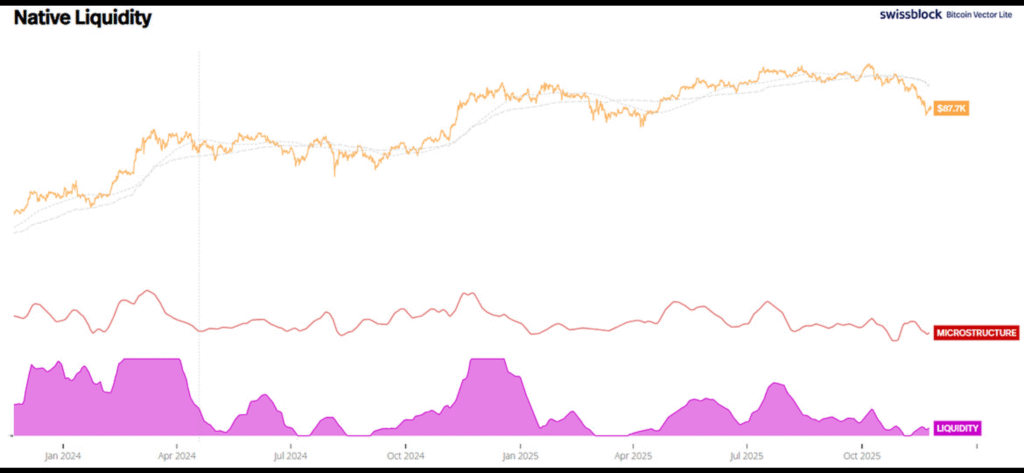
Network liquidity — a proxy for health and capital commitment — just put in a higher low while price hit a lower low.
That’s rare.
That’s powerful.
And it almost never happens during true bear market transitions, where liquidity collapses and stays suppressed.
Instead, rising liquidity says:
Conviction capital is quietly stepping in despite fear and volatility.
This is often the scaffolding of a bottom.
4️⃣ Macro Cycle: Late Stage, Fragile, But Not a Bear Market
We are unquestionably late in the cycle — but according to all three major macro components (liquidity, risk-off signal, and cycle risk), Bitcoin has not triggered a cycle top.
A bear market requires:
- negative liquidity
- capital leaving the network
- structurally suppressed flows
We’re not seeing that.
Instead:
- Liquidity is recovering
- Macro Cycle Risk is declining
- Network flows are stabilizing
This is a fragile phase, not a terminal one.
5️⃣ So Where Are We?
Think: late-cycle turbulence — not late-cycle doom.
Momentum is damaged, yes.
Sentiment is wrecked, yes.
Fear is high, absolutely.
But structurally?
Bitcoin is behaving like an asset building a base, not breaking down into a bear market.
Or in plain Byte & Block terms:
Price is screaming; liquidity is whispering.
And Bitcoin bottoms often start with whispers.
🇨🇱 Texas Becomes First State to Buy ₿ Bitcoin Under Public-Funds Reserve — $5M Invested via ETF
According to a report from the state comptroller’s office, Texas has quietly purchased $5 million worth of Bitcoin via the BlackRock iShares Bitcoin Trust ETF, marking the first confirmed public-funded BTC allocation by a U.S. state.

This isn’t symbolic — it’s structural. A U.S. state using taxpayer-backed funds to own BTC gives Bitcoin a new layer of legitimacy: a quasi-sovereign reserve asset. If other states follow, Bitcoin could gain a new class of long-term, low-sell-pressure holders that change supply dynamics for years.
Texas isn’t alone. A small but growing cohort of U.S. states is now seriously evaluating Bitcoin as part of their financial strategy. New Hampshire recently approved a $100 million Bitcoin-backed municipal bond, marking the first attempt by a state to directly integrate BTC into public financing mechanisms.

Wyoming, Oklahoma, and Florida have all floated proposals related to Bitcoin reserves, mining incentives, or treasury allocations. If these early experiments succeed — even modestly — it could trigger a wave of state-level Bitcoin adoption where BTC becomes a strategic reserve asset, similar to gold. That would add a powerful new buyer class to the market: governments that accumulate slowly, rarely sell, and often set long-term policy around their holdings.
🏦 Polymarket Cleared by CFTC — Prediction Markets OK’d to Return to U.S.
The Commodity Futures Trading Commission has officially approved Polymarket’s re-entry into the U.S. market after a multi-year ban, granting it access via its acquisition of a licensed derivatives exchange and clearinghouse. The decision ends a long period of regulatory limbo, and Polymarket is now positioned to offer event-based contracts to Americans writes Reuters.

This is a big win for crypto infrastructure — when regulators sign off on prediction markets built on blockchain and crypto rails, it signals growing institutional comfort with decentralized finance. It also broadens the use cases for crypto beyond trading and lending, making blockchain tools increasingly part of mainstream financial plumbing.
Meme of the day

Follow @byte_and_block for bite-sized insights, or subscribe to the newsletter for deeper dives.
Subscribe to our newsletter!